
Swelling after an aesthetic treatment usually peaks within the first 24 to 72 hours and then eases a little more each day. With most injectables and lasers it is mostly gone within a week. How much you get and how long it lasts depends on three things: what was done, where on the face it was done, and how your own body reacts. What matters most is the direction it moves in. Swelling that is a bit less every morning is the usual pattern. Swelling that gets worse after the first few days, is clearly one-sided and growing, or comes with skin colour changes or pain that keeps increasing is a reason to contact the clinic, not to keep waiting.
This guide describes what people commonly see on each day for the treatment types most often booked on a Seoul trip. It also covers how to plan your days around it. It is not medical advice. Your clinic’s aftercare instructions for your specific treatment come first, and if something worries you, the right step is to send a message and ask.
Why does swelling happen at all, and why does it vary so much?
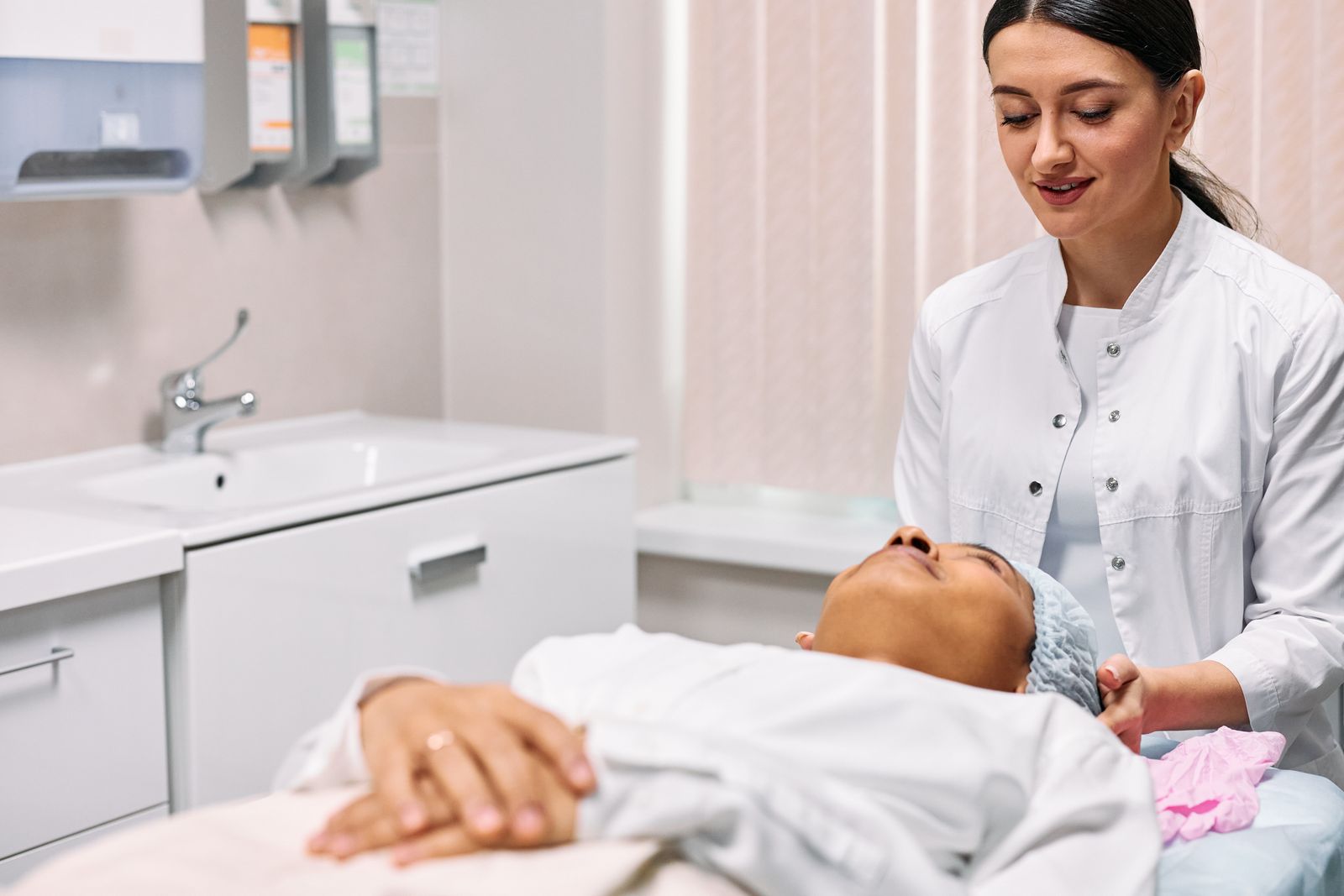
Swelling is the body’s normal response to anything that disturbs the tissue: a needle, injected product, heat from a laser or energy device, or tiny controlled injuries from microneedling. Fluid and immune cells move into the area to start repair, and that shows up as puffiness, warmth and redness.
The amount differs because the triggers differ:
- Volume added under the skin. Filler adds material and also draws a little water at first, so the area looks bigger than the final result for a few days.
- Number of needle points. Skin boosters and microneedling make many small entry points across a wide area, which can leave tiny bumps and patchy redness.
- Heat delivered into the tissue. Lasers and radiofrequency devices tend to cause redness and a mild “warm” puffiness more than dramatic swelling.
- The area itself. Lips and the under-eye area swell more easily than the forehead or jawline, because the tissue there is loose and has plenty of blood vessels.
- You. Salt intake, alcohol, sleep, menstrual cycle, a long flight and natural tendency to bruise all change how you look on day two.
Two people can have the identical treatment and see quite different swelling. That is normal and doesn’t on its own say anything about how good the result will be.
What does a typical day-by-day picture look like?

The general shape is the same for most treatments. What changes is how big it gets and how long it lasts.
Day 0 (treatment day). You may leave with redness, small raised spots at injection points, or a “tight” warm feeling after energy devices. Swelling from injectables is often modest in the first few hours and builds overnight. Numbing cream, where it was used, can also make the skin look flushed for a while.
Day 1. This is often when people are most surprised. Filler areas, especially lips and under-eyes, can look fuller and less even than the final result. Skin booster bumps may still be visible. Laser redness is usually fading but may still look like mild sunburn.
Day 2–3. For most injectables this is the peak, or just past it. Bruising, if any, may change colour from purple-blue to green-yellow, which is part of normal clearing. Asymmetry is common at this stage because the two sides rarely swell at the same speed.
Day 4–5. Most visible swelling has gone down. What’s left is often only noticeable to you, mostly in the morning, after a salty dinner, or after sleeping face-down.
Day 7. For most filler, skin booster and laser sessions, swelling has largely settled. Some residual firmness or slight unevenness can take longer, which is one reason clinics usually suggest waiting about two weeks before judging the final shape of filler.
Beyond a week. Some changes are slower by nature. Collagen-stimulating treatments develop gradually over weeks to months, so “settled” and “final result” are not the same moment.
How does it differ by treatment type?
Here is how the main treatment groups on a Seoul menu tend to behave. Use it as a rough guide, not a promise.
Filler: the most visible, front-loaded swelling
Filler usually swells the most of anything on the menu, and lips and under-eyes swell the most of all filler areas. On MIO’s menu filler is priced per area, not per syringe, and each area has an imported line (Juvéderm, Restylane, Belotero) and a Domestic line. As published at the time of writing, Lip Filler is KRW 349,000 (about USD 250) on the imported line or KRW 99,000 (about USD 72) on the Domestic line, and Under-Eye Filler (Belotero Soft) is KRW 349,000 (about USD 250). Prices exclude VAT, and choosing a specific doctor adds KRW 100,000 (about USD 72). How much product an area needs is decided at consultation.
MIO’s own trip guidance for every filler line is first_day: have it at the start of your trip, so the peak swelling passes while you are still in Seoul and you can be seen again if something needs a look. If you want the full reasoning, our piece on why filler should go on the first day of a Seoul trip covers settling and the flight home in detail, and filler by area compares how much each area tends to swell.
At MIO, filler sits within the main focus of the doctors whose published areas include botox, filler and lifting, such as the medical director, Jung Guhyun, and Shin Seungyong. Both also see patients in English, which helps when you are describing on day two exactly what you see in the mirror.
Skin boosters: bumps first, then redness
Skin boosters like Rejuran and JUVELOOK Skin Booster are injected as many small deposits across the face. The common pattern is small raised bumps for the first day or so, then patchy redness or pinpoint marks. Most of it fades within a few days, though small bumps can last longer in some people. As published at the time of writing, Rejuran Healer 2cc is KRW 189,000 (about USD 137) and JUVELOOK Skin Booster 2cc is KRW 109,000 (about USD 79), both excluding VAT. Both use numbing, and MIO marks both last_day. That can sound backwards next to filler, but the reasoning is different: these treatments don’t need a follow-up check, and their visible bumps are what you’d rather not carry through the rest of a sightseeing trip.
Lasers and microneedling: redness more than swelling
Laser toning such as PicoSure Toning + Mask (KRW 39,000, about USD 28, no numbing, trip timing any) usually leaves mild redness that fades within hours to a day. More intensive sessions behave differently. Potenza Full Face, a microneedling radiofrequency treatment (KRW 89,000, about USD 65, numbing used), is marked last_day because redness, puffiness and pinpoint marks can last a few days. PicoSure Dual Toning is also marked last_day. All prices exclude VAT. At MIO, lasers and acne or scar work fall within the focus of Kim Doyoung and Lee Seungwook, so it is worth asking at consultation which of them handles the concern you came for.
Lifting devices: usually mild, sometimes tender
Ultrasound and radiofrequency lifting, such as Ultherapy Prime and Thermage, typically cause less visible swelling than injectables. Some people notice mild puffiness, redness or tenderness to the touch for a few days. Occasionally there are small tender spots or numb patches that take longer to settle. As published at the time of writing, Ultherapy Prime 300 shots is KRW 1,090,000 (about USD 790) with numbing, and Thermage 300 shots is KRW 1,190,000 (about USD 862), described as a brief sting. Both exclude VAT and are marked trip timing any. Our explainer on what a “shot” means on a lifting menu covers how those tiers compare.
What is ordinarily expected, and what is worth contacting the clinic about?
This is the section to keep handy. It describes patterns, not diagnoses. When in doubt, message the clinic. They would rather hear from you early.
Usually within the expected range:
- Swelling that peaks in the first 48–72 hours and is less each morning after that
- Mild asymmetry in the first few days
- Bruises that change colour as they clear
- Small bumps at injection points that are flattening
- Redness that fades over hours to a few days after lasers
- Mild tenderness when you press the area
Worth contacting the clinic promptly about:
- Swelling that is getting bigger after day three instead of smaller
- Swelling that is clearly one-sided and still increasing
- Pain that keeps rising instead of easing, or pain that seems out of proportion to the treatment
- Skin over a treated area turning very pale, dusky, greyish, mottled or blotchy, especially soon after filler
- Warmth, spreading redness, pus, fever or feeling generally unwell
- A firm lump that becomes more tender over time rather than less
- Anything that simply doesn’t feel right to you
Seek urgent medical care straight away for any change in vision, sudden severe pain, or difficulty breathing or swallowing after a facial injection, and tell the clinic as soon as you can. These are rare, but they are not things to wait out overnight in a hotel room.
When you message, a clear photo taken in good daylight, plus a short note of when the treatment was and how it has changed since, gives the clinic far more to go on than a description alone.
How should you plan your days around swelling?
Planning is what turns swelling from a stressful surprise into a non-event.
Sequence the trip by downtime. A practical order uses MIO’s own guidance: filler early (first_day), skin boosters and more intensive lasers like Potenza late (last_day), and low-downtime sessions such as PicoSure Toning anywhere in between. That way the most visible swelling happens while you are near the clinic, and the bumpiest-looking days fall at the end of the trip instead of the middle.
Keep the first evening light. Plan a quiet dinner rather than a long night out after injectables. Many clinics advise avoiding alcohol, saunas, hot baths and hard exercise for the first day or two, so check your aftercare sheet.
Expect to look different in photos. If you have an event, a wedding or a photoshoot, put at least a week between it and filler or skin boosters, and ideally two weeks for filler.
Think about the flight. Long flights, cabin dryness and salty airline meals can make leftover swelling look a little puffier on arrival. That is usually temporary, but it is another reason to front-load filler.
Use your consultation photos. MIO uses detailed clinical photography and AI-assisted facial analysis to plan treatment, so there is a measured baseline of how your face looked before. Ask to see or keep those images. Comparing against them is more reliable than comparing against your memory of yesterday. Our guide to treatment records and before photos explains what to request before you fly home.
Short on weekdays? MIO is open on Sundays too, which makes it easier to put a treatment at the very start or very end of a weekend-based trip and still be close by during the swelling peak.
Who should be extra careful about timing?
Some people tend to swell or bruise more, or need more care with scheduling:
- People who bruise easily, or who take medicines or supplements that affect bleeding. Mention these at consultation and don’t stop prescribed medication without your own doctor’s advice.
- Anyone with a history of cold sores, since lip treatments can sometimes trigger a flare
- People with an active skin infection, an inflamed breakout or irritation in the treatment area. Treatment is often postponed in these cases.
- Anyone pregnant or breastfeeding. Many aesthetic treatments are not recommended during this time.
- Travellers with very short trips who want filler and have no buffer before flying
If any of these apply, a treatment with less downtime or a different trip order may suit you better. That’s a conversation to have before booking, not after.
FAQ
How long does swelling last after lip filler?
Lip swelling usually peaks within 24–72 hours and is mostly down within about a week, though slight firmness or unevenness can take up to around two weeks to settle. It varies from person to person, and lips swell more than most other areas.
Is it normal for one side to be more swollen than the other?
Mild asymmetry in the first few days is common, because the two sides rarely swell or settle at the same speed. Swelling on one side that keeps increasing after the first few days is worth sending the clinic a photo of.
Should I ice the area?
Many clinics recommend gentle cold compresses in the first day or so, wrapped in cloth and never applied directly to the skin. But aftercare differs by treatment, so follow the instructions your clinic gives you for your specific procedure.
When should I contact the clinic instead of waiting?
Contact the clinic if swelling grows after day three, if pain keeps rising, if the skin turns pale, dusky or blotchy, or if you notice warmth, pus or fever. Get urgent medical care for any vision change, sudden severe pain, or difficulty breathing after a facial injection.
Can I fly while I’m still swollen?
Many people fly with some residual swelling, and cabin conditions can make it look a little puffier for a while. Booking filler at the start of the trip gives the peak time to pass while you are still near the clinic. Ask your clinic about your specific treatment before flying.
Does more swelling mean a worse result?
Not by itself. How much someone swells depends on the area, the treatment and the individual, and it doesn’t directly predict the final outcome. The final shape is judged after swelling has settled, usually around two weeks for filler.
Book at MIO Clinic, Gangnam
Seoul Skin Notes is the official journal of MIO Clinic, a skin & aesthetic clinic in Gangnam, Seoul. The MIO team handles consultations and bookings in English over WhatsApp — tell them what you are considering and they will walk you through your options.
MIO Clinic
2-3F, FINE TOWER, 372 Gangnam-daero, Gangnam-gu, Seoul
Gangnam Station, Exit 4 — 3-minute walk
Hours: Mon & Fri 10:00–21:00 · Tue–Thu & Sat 10:00–19:00 · Sun 10:00–19:00
Web:mioclinic.kr/en · Instagram:@mioclinic_global · Email:en-official@mioclinic.kr · Google Maps