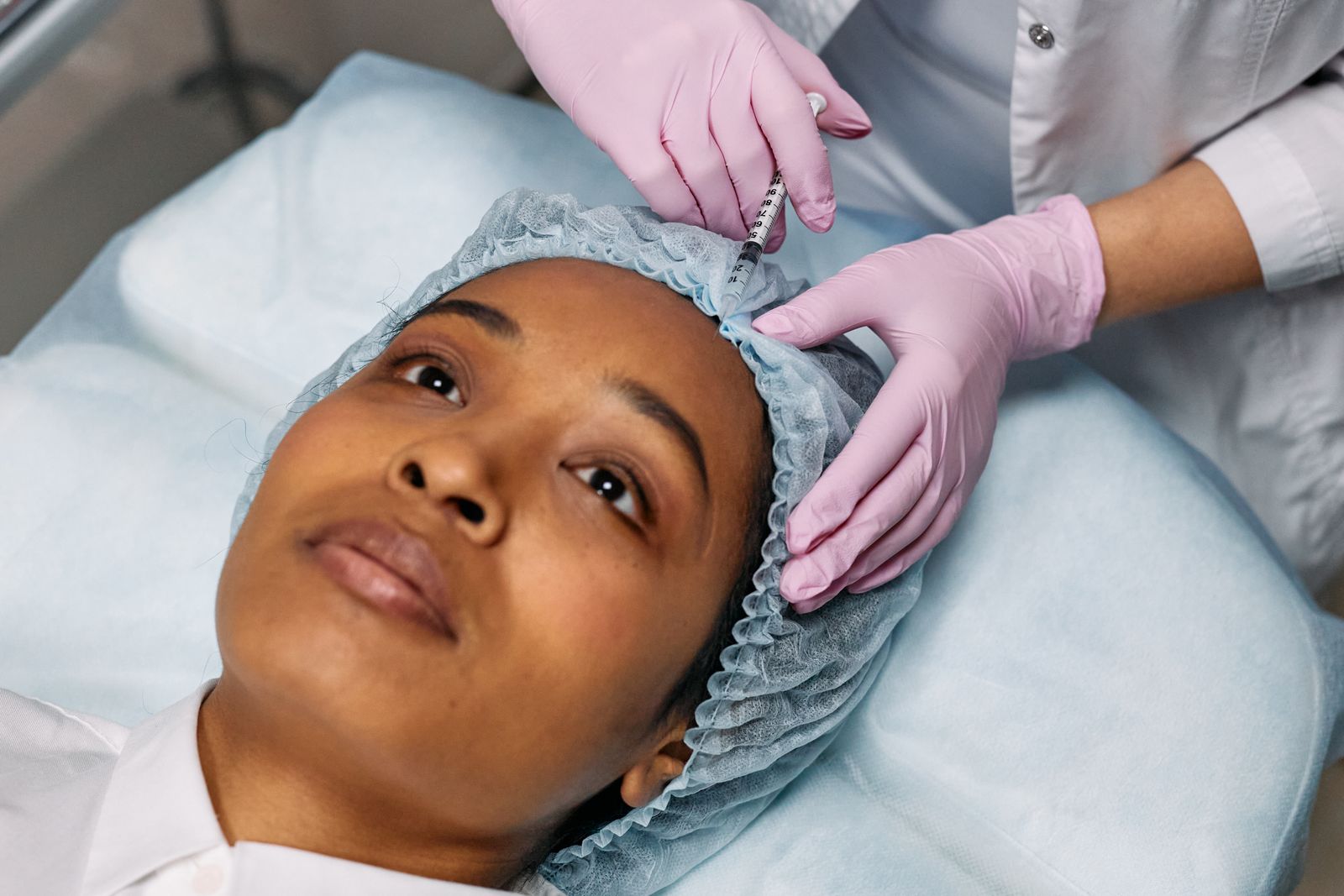
Filler is not one treatment applied to different spots. Each area has its own job, its own anatomy and its own recovery. Nose filler changes a profile line and sits near important blood vessels. Lip filler is the most sensitive and swells the most visibly. Chin filler is fairly well tolerated and mainly changes balance and projection. Under-eye filler goes into the thinnest skin on the face, where the wrong candidate can end up looking puffier than before. Nasolabial filler softens a fold but rarely erases it. Because of these differences, a good clinic decides how much product you need after it has looked at your face, not before. This guide covers each area in turn so you know what to expect when you ask for a quote.
At MIO Clinic in Gangnam, filler is priced per treatment area, and most areas have two lines: an imported line (Juvéderm, Restylane, Belotero) and a Domestic line. We’ve written separately about why filler is priced by area rather than by syringe and what the imported and domestic columns actually mean. This piece is about what happens in each area itself.
What does each filler area actually correct?
Each area deals with a different kind of problem. Some add structure, some add volume, and some soften a shadow:
- Nose: changes the profile without surgery. It can raise a low bridge, smooth a small hump by filling above and below it, or give a little lift at the tip. It adds projection, so it can’t make a nose narrower or smaller.
- Lips: adds volume, defines the border or evens out asymmetry. The result depends on a lot of small decisions about where the product goes.
- Chin: adds forward projection or length. This can balance a profile and sharpen the line from lips to jaw.
- Under-eye (tear trough): fills the hollow groove between the lower lid and the cheek that causes a tired shadow. It treats hollowness. It does not treat puffiness.
- Nasolabial folds: softens the lines running from nose to mouth. These folds usually come from volume loss in the mid-face and how the cheek is supported. Filler can make them softer, but it rarely makes them disappear.
On MIO’s menu the nasolabial line also covers the front and side cheek (listed as “Nasolabial/Front Cheek/Side Cheek”). That matters because a fold is often better treated by restoring a little support higher up than by filling the crease directly.
How do the areas differ in sensitivity?

Lips are the most sensitive area. The chin is usually the easiest to tolerate. The other three fall in between.
Lips have dense nerve endings and a thin moist surface, so most people feel them clearly even with numbing. The nose isn’t especially painful, but pressure on the bridge and tip feels odd. Under-eye skin is thin, and the area feels delicate rather than sharp. The chin and nasolabial area have more tissue padding.
MIO’s published menu marks almost every filler line as requiring numbing, which means you should add time to your appointment for the anaesthetic to work. There is one exception. The Domestic Chin Filler line is marked as a brief sting rather than full numbing. That fits the chin being one of the easier areas to treat, and it’s useful to know if you are planning a short appointment.
How does downtime differ by area?
Swelling and bruising are the main downtime for every area. How long they last and how visible they are depends on where the filler went. The timings below are general and vary from person to person:
| Area | Typical visible swelling | Bruising risk | What’s specific |
|---|---|---|---|
| Lips | 2–5 days, sometimes up to a week | Moderate to high | Lips often look larger at first than the final result |
| Nose | 1–3 days | Low to moderate | Avoid pressing on the bridge; ask whether you can wear glasses |
| Chin | 1–3 days | Low | Firmness is normal while it settles |
| Under-eye | Several days, can linger in some people | Moderate | Thin skin shows bruising and any excess clearly |
| Nasolabial / cheek | 1–3 days | Low to moderate | Tenderness when smiling or chewing for a few days |
The usual general advice for the first day or two is to avoid alcohol, intense exercise, saunas and firm massage of the treated area. Bruising can take a week or more to fade completely, so don’t book filler right before an event where you’ll be photographed.
MIO’s own trip-timing guidance puts every filler line in the “first day” of a trip. Having filler early in your stay gives swelling time to go down while you’re still in Seoul. It also leaves room for the clinic to check you before you fly home. For the wider picture of how treatments fit into a trip, see which treatments fit the first day of a trip, and which fit the last.
What are the real risks, area by area?
Every area carries the usual risks: swelling, bruising, tenderness, lumps that are felt more than seen, and asymmetry. On top of those:
- Nose: The nose is considered one of the higher-risk filler areas because of the blood vessels running along it. The rare but serious risk is filler blocking a blood vessel (vascular occlusion). Signs include sudden blanching, unusual pain or skin colour changes. These need immediate attention. People who have had nose surgery or implants carry additional considerations and should mention it at consultation.
- Lips: Lumps and overfilling are the main cosmetic risks. If you get cold sores, tell the clinic, because filler can trigger an outbreak.
- Under-eye: Product placed too shallow can show as a bluish tint (the Tyndall effect). Filler also draws in some water, which can make an area that already swells look puffier.
- Chin: This area is generally lower risk, but overprojecting it can throw a profile off balance.
- Nasolabial: Filling the crease heavily can make the lower face look weighed down. That’s why support higher up is often considered first.
If a result is unwanted, hyaluronic acid filler can be dissolved with hyaluronidase. On MIO’s menu this is listed as Hyaluronidase (Mio Clinic) at KRW 50,000 (about US$36). Dissolving filler placed elsewhere is KRW 100,000 (about US$72). That price difference is useful to know if you arrive with product from a previous clinic.
Who is a poor candidate for each area?
Filler isn’t the right answer for everyone. Hold off or expect a different recommendation if:
- You are pregnant or breastfeeding, have an active skin infection or cold sore near the area, or have a significant health condition. Tell the clinic about all of these at consultation.
- You take blood thinners. They raise the risk of bruising. Don’t stop them yourself; mention them.
- For under-eye: you have prominent under-eye bags or puffiness. Filler in that setting can make things worse, and a different approach may suit you better.
- For nose: you want the nose smaller or narrower. Filler adds projection and can’t reduce size.
- For nasolabial folds: you expect the line to vanish. Deep folds usually soften rather than disappear, and a same-day dramatic change isn’t realistic.
How long do results last in each area?
These figures are general ranges. How long filler lasts depends on the product, the amount, your metabolism and how much the area moves.
- Lips: often around 6–12 months. Lips move constantly, so they tend to break filler down faster than most areas.
- Nose: frequently lasts longer, since the area moves little.
- Chin: often lasts about a year or more, depending on the product.
- Under-eye: can last a long time because the area moves little, sometimes longer than people expect.
- Nasolabial / cheek: often around 9–12 months or more.
The results fade gradually. Most people top up before the filler is fully gone.
Why is the amount decided at consultation, not in advance?
Two people asking for “lip filler” can need very different amounts. It depends on the starting shape, how much volume has been lost, any product still left from earlier treatments, and how visible a change you actually want. A clinic that promises a fixed cc amount before seeing you is guessing.
At MIO, filler is sold by area, and how much product that area needs is decided at consultation. MIO assesses the face using detailed clinical photography and AI-assisted facial analysis, so the plan is based on measured proportions rather than a quick look in the mirror. The analysis informs the doctor’s plan but doesn’t make the decision. The doctor does. This is also the point to talk about staging. It’s often safer to use less at the first visit and add more later than to overcorrect in one go, especially for lips and under-eyes.
MIO’s doctors are experienced, and two of them list filler among their main areas. Jung Guhyun (medical director) focuses on botox, filler, lifting, skin boosters and lasers. Shin Seungyong focuses on lifting, botox, filler, contouring and anti-aging. Both see patients in English. Doctors are assigned at booking, so ask at consultation which of them handles the area you’re interested in.
What does each area cost at MIO?
As published at the time of writing, MIO’s filler prices are below. All prices exclude VAT, and choosing a specific doctor adds KRW 100,000. USD figures are approximate conversions at about KRW 1,380 per dollar and will shift with the exchange rate.
| Area | Imported line (Juvéderm / Restylane / Belotero) | Domestic line |
|---|---|---|
| Nose | KRW 399,000 (~US$289) | KRW 159,000 (~US$115) |
| Lips | KRW 349,000 (~US$253) | KRW 99,000 (~US$72) |
| Chin | KRW 299,000 (~US$217) | KRW 99,000 (~US$72) |
| Nasolabial / front & side cheek | KRW 349,000 (~US$253) | KRW 99,000 (~US$72) |
| Under-eye | KRW 349,000 (~US$253), Belotero Soft only | — |
A few details stand out:
- Under-eye has only one line, Belotero Soft. There’s no Domestic under-eye option on the menu, which suits how delicate that area is.
- There is a Lip Filler + Corner-of-Mouth Botox (Domestic) combination at KRW 109,000 (~US$79). Some people find the corners of their mouth turn down. A small dose of botox there can relax that pull alongside the lip volume.
- If you want your lips hydrated rather than bigger, Lip Rejuran HB 1cc is also on the menu at KRW 175,000 (~US$127). It’s a skin booster, not a volumiser, and is worth asking about if your concern is dryness or fine lines on the lips.
Final cost depends on the area, the line and what the consultation finds, so treat these as starting points rather than a quote. If two areas are on your list, ask about both at the same visit. The doctor can tell you whether treating one changes what the other needs.
FAQ
Which filler area hurts the most?
Lips are usually the most sensitive because of their dense nerve endings, even with numbing. The chin tends to be the easiest. MIO’s menu marks most filler lines as needing numbing, and the Domestic Chin Filler as a brief sting.
How long will I be swollen after filler?
Most areas show visible swelling for about 1–3 days. Lips can take up to a week to settle, and under-eye swelling can linger in some people. Bruising, if it happens, may take a week or more to fade fully.
Can I have filler on the last day of my trip?
MIO’s own guidance places every filler line on the first day of a trip. That gives swelling time to settle in Seoul and leaves time for a check before you fly.
How many cc will I need for my lips or nose?
That’s decided at consultation, not in advance. It depends on your anatomy, any existing filler and how much change you want. MIO prices filler per area and sets the amount after its photo-and-analysis-based assessment.
Can filler under the eyes make me look puffier?
It can, if you already have prominent bags or tend to swell. Filler suits a hollow groove, not puffiness, so some people are advised against it.
What if I don’t like the result?
Hyaluronic acid filler can be dissolved with hyaluronidase. At MIO this is listed at KRW 50,000 (about US$36) for filler placed at MIO and KRW 100,000 (about US$72) for filler placed elsewhere, excluding VAT.
Book at MIO Clinic, Gangnam
Seoul Skin Notes is the official journal of MIO Clinic, a skin & aesthetic clinic in Gangnam, Seoul. The MIO team handles consultations and bookings in English over WhatsApp — tell them what you are considering and they will walk you through your options.
MIO Clinic
2-3F, FINE TOWER, 372 Gangnam-daero, Gangnam-gu, Seoul
Gangnam Station, Exit 4 — 3-minute walk
Hours: Mon & Fri 10:00–21:00 · Tue–Thu & Sat 10:00–19:00 · Sun 10:00–19:00
Web:mioclinic.kr/en · Instagram:@mioclinic_global · Email:en-official@mioclinic.kr · Google Maps