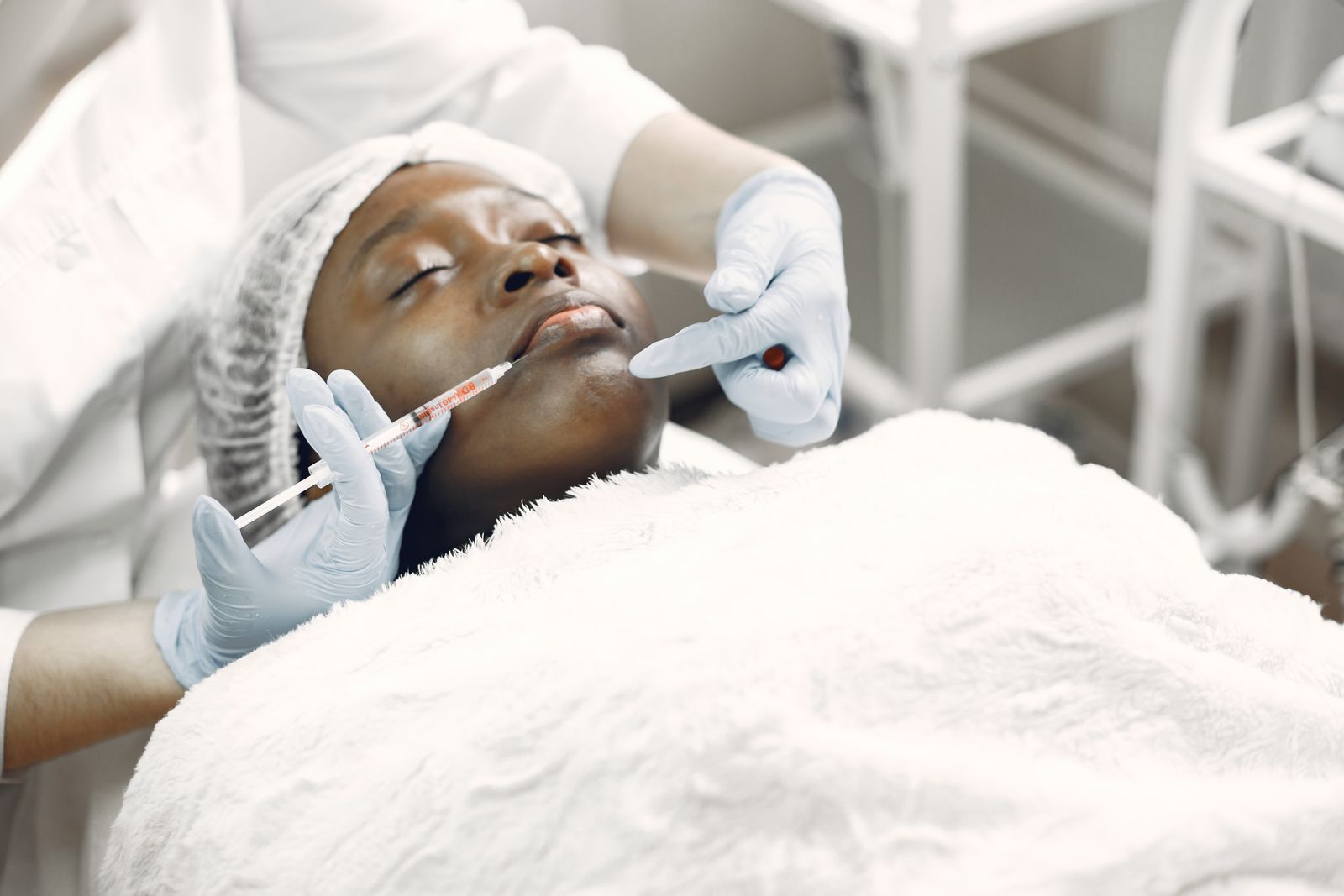
Many Seoul clinics, MIO Clinic included, list filler by treatment area (nose, lips, chin, under-eye) and not by the syringe or cc. An area price is the fee for treating that part of the face. It is not a price for a fixed amount of product. So a per-area quote and a per-syringe quote measure different things, and you can’t line them up until you know how much product each one actually includes. Before you compare, ask four questions: which area, which product line, how much product the price covers, and what happens if you need more.
Here’s how an area-based menu is organised, why it makes comparing clinics hard, and what to confirm so the number you’re quoted matches what ends up in your face.
What does “priced by area” actually mean?

An area price is a fee for treating one region of the face. It isn’t a fee for a measured quantity of product.
On a per-syringe menu the bill is roughly the number of syringes times the syringe price. Add a second syringe and the price roughly doubles. On a per-area menu you pay for an outcome zone, such as “nose” or “chin”. How much product the doctor places there is a clinical decision made at the appointment, after they’ve assessed your anatomy.
Each model suits different people. With per-syringe pricing you can see exactly what you’re paying for, but you don’t know the total until the doctor says how many syringes you need. Per-area pricing gives you a total up front, but the amount of product behind it isn’t obvious. Neither is automatically better. They answer different questions.
How MIO Clinic’s filler menu is organised
MIO’s published filler menu (prices as published at the time of writing, excluding VAT) is arranged by area. Most areas appear twice: once for an imported product line (Juvéderm, Restylane or Belotero) and once for a Domestic line.
| Area (as listed on MIO’s menu) | Imported line | Domestic line |
|---|---|---|
| Nose | KRW 399,000 (~USD 287) | KRW 159,000 (~USD 114) |
| Lips | KRW 349,000 (~USD 251) | KRW 99,000 (~USD 71) |
| Chin | KRW 299,000 (~USD 215) | KRW 99,000 (~USD 71) |
| Nasolabial / Front Cheek / Side Cheek | KRW 349,000 (~USD 251) | KRW 99,000 (~USD 71) |
| Jawline / Marionette | KRW 349,000 (~USD 251) | KRW 99,000 (~USD 71) |
| Forehead / Glabella / Temples | KRW 349,000 (~USD 251) | KRW 129,000 (~USD 93) |
| Under-Eye | KRW 349,000 (Belotero Soft only) | — |
| Forehead / Neck wrinkle filler | KRW 299,000 (Belotero Soft only) | — |
USD figures are approximate, at about KRW 1,390 per USD. Exchange rates move.
Some patterns stand out:
- The same area can cost three times as much or more depending on the line. Chin filler is KRW 99,000 on the Domestic line and KRW 299,000 on the imported line. A quote that just says “chin filler” doesn’t tell you which one you’re getting.
- Some areas have only one product. Under-eye filler is listed only as Belotero Soft. That’s a softer gel of the kind commonly chosen for thin under-eye skin. Delicate areas usually have fewer product options.
- Some menu lines group several sub-areas together. “Nasolabial / Front Cheek / Side Cheek” is one line. The menu doesn’t say whether one price covers all three sub-areas or any one of them, so ask at consultation.
- There’s also a combination line: Lip Filler + Corner-of-Mouth Botox (Domestic) at KRW 99,000… listed at KRW 109,000 (~USD 78).
Two other menu rules apply to every filler line. Prices exclude VAT, and choosing a specific doctor adds KRW 100,000 (~USD 72).
For a closer look at the two price columns themselves, see Imported vs Domestic Fillers in Seoul: What the Two Price Columns Actually Mean.
Not everything on a filler menu is priced by area
Some injectables sit next to fillers but are sold in cc, and that difference matters when you read the menu:
- JUVELOOK Volume: 2cc at KRW 249,000 (~USD 179), 4cc at KRW 349,000 (~USD 251)
- Lip Rejuran HB: 1cc at KRW 175,000 (~USD 126)
So KRW 349,000 on this menu can mean one area of imported filler or 4cc of JUVELOOK Volume. The numbers match, but the units don’t, and you can’t compare those two lines by price alone. Before comparing, check what each line is counted in: area, cc, shots, units or session. The same rule applies across the whole menu, as covered in How to Read a Seoul Clinic Price List.
Why area pricing makes cross-clinic comparison hard
You can’t compare an area price and a syringe price directly until you know how much product the area price includes.
Say one clinic quotes a chin at a flat area price and another quotes per 1cc syringe. If your chin needs one syringe’s worth of product, the per-syringe quote may come out lower. If it needs more, the area quote may. The answer depends on your anatomy and on the result you want, and neither of those is known until someone has assessed you in person.
For context, Seoul clinics that charge per syringe commonly list something like KRW 100,000 to 400,000+ per 1cc, depending on brand and product line. That range is approximate and varies a lot between clinics. It tells you the market is wide. It doesn’t tell you what any single clinic will charge you.
Three more things blur comparisons:
- Brand tiers. “Filler” with no product line named could be imported or domestic. On MIO’s menu that difference alone is up to about 3×.
- VAT. One quote may include VAT and another may not. MIO’s listed prices exclude it.
- Add-ons. Doctor selection, numbing and follow-up adjustments may be priced differently from clinic to clinic, or left out of the headline number.
What to confirm before you accept a filler quote
Ask these so the quote matches what you’ll actually receive:
- Which area exactly? If the line groups sub-areas (for example nasolabial / front cheek / side cheek), does the price cover one of them or all of them?
- Which product line? Imported (and which brand) or Domestic? Get the name in writing.
- Is there a product limit in the area price? Ask what happens if the doctor thinks you need more product than the price assumes.
- Is VAT included? On MIO’s menu it isn’t.
- Are there add-ons? For example the KRW 100,000 doctor-selection fee, if you want a specific doctor.
- What’s the plan if something needs adjusting? Ask about follow-up, and about dissolving the filler if needed (see below).
Don’t read a precise cc figure into an area price. How much product an area takes is decided at consultation, and it differs from person to person.
How the consultation shapes the final number
At MIO, the area and the product line are decided after an assessment rather than before it. MIO assesses the face using detailed clinical photography and AI-assisted facial analysis, and the doctor builds the treatment plan from that. The analysis gives the doctor measured information to work with. The doctor decides on the plan. The analysis doesn’t diagnose anything.
In practice, the plan may be narrower than you expected (one area, not three) or it may use a different product line from the one you had in mind. MIO describes its approach as conservative and focused on natural results, so a plan that does less is a normal outcome, not a failure. Some people turn out not to be good filler candidates at all. Active skin infection in the area, certain medical conditions, and pregnancy are common reasons to postpone. Expectations that filler can’t meet physically are another reason to hold off.
MIO’s published FAQ states that the skin analysis scan carries no additional charge.
Downtime, sensation and how long filler lasts
MIO’s menu marks every filler line as needing numbing, so plan for numbing time before the injections.
Common, usually temporary effects:
- Swelling, which is often more noticeable on lips and under-eyes
- Bruising at injection points
- Tenderness or a firm feeling as the product settles
- Mild unevenness early on, which often settles within days to a couple of weeks
Rarer but serious risks, including vascular complications, are why filler is a medical procedure and why the injector’s assessment and anatomy knowledge matter. Results can’t be promised. How long filler lasts depends on the product, the area and your own metabolism. Many hyaluronic acid fillers are described as lasting from several months to over a year. Mobile areas like the lips tend to fade sooner.
Timing on a trip: MIO’s own guidance lists filler as a first-day treatment. Having it early leaves time for swelling to settle and for a review before you fly home. More on sequencing: Which Treatments Fit the First Day of a Trip, and Which Fit the Last.
What if you need filler dissolved?
Hyaluronic acid filler can usually be dissolved with hyaluronidase. MIO lists two prices, and here the unit that matters is where the original filler was placed:
- Hyaluronidase for filler placed at MIO Clinic: KRW 50,000 (~USD 36)
- Hyaluronidase for filler placed elsewhere: KRW 100,000 (~USD 72)
Both are marked first-day on MIO’s trip guidance. If you arrive with old filler you want removed before new treatment, tell the clinic in advance. Dissolving and re-filling are sometimes spaced apart instead of done in the same visit.
FAQ
Why don’t Seoul clinics just charge per syringe?
Some do. Others price by area, so the fee is tied to the result for that region and not to a count of product. Each approach is legitimate. What matters is knowing which one you’re being quoted in.
Is an area price cheaper than paying per syringe?
It depends on how much product your face needs, and that can’t be known before an in-person assessment. An area price can work out cheaper or more expensive than a per-syringe quote.
How much filler is included in one area at MIO Clinic?
MIO’s menu prices filler by area and doesn’t state a fixed cc amount per area. The amount is decided at consultation, so ask the doctor before treatment.
Why does the same area have two prices on MIO’s menu?
Most areas are listed once for an imported line (Juvéderm, Restylane or Belotero) and once for a Domestic line. For example, chin filler is KRW 299,000 imported and KRW 99,000 Domestic, excluding VAT, as published at the time of writing.
Does filler at MIO Clinic require numbing?
Yes. MIO’s menu marks all filler lines as requiring numbing, so allow extra time at your appointment.
When in my trip should I book filler?
MIO’s guidance lists filler as a first-day treatment. That gives swelling time to settle and leaves room for a review before your flight home.
Book at MIO Clinic, Gangnam
Seoul Skin Notes is the official journal of MIO Clinic, a skin & aesthetic clinic in Gangnam, Seoul. The MIO team handles consultations and bookings in English over WhatsApp — tell them what you are considering and they will walk you through your options.
MIO Clinic
2-3F, FINE TOWER, 372 Gangnam-daero, Gangnam-gu, Seoul
Gangnam Station, Exit 4 — 3-minute walk
Hours: Mon & Fri 10:00–21:00 · Tue–Thu & Sat 10:00–19:00 · Sun closed
Web:mioclinic.kr/en · Instagram:@mioclinic_global · Email:en-official@mioclinic.kr · Google Maps