
The number printed on a Seoul clinic’s price list is usually a starting figure, not your total. Three things move it: VAT, which is quoted separately and adds 10% to most aesthetic procedures; the unit of sale, because Korean menus sell by shot, line, unit, cc, or kilojoule rather than by “one treatment”; and add-ons like stronger anesthesia, extra areas, or post-treatment care that appear as their own line items. Once you know how those three work, a Korean menu becomes readable — and you can walk into a consultation able to ask the one question that actually matters: what is the all-in number for what I specifically need?
This is not a case of Seoul clinics hiding things. It’s a different pricing convention from the one most American clinics use, and it catches visitors off guard. Here’s how to translate it.
Why the number on the menu is almost never the number you pay
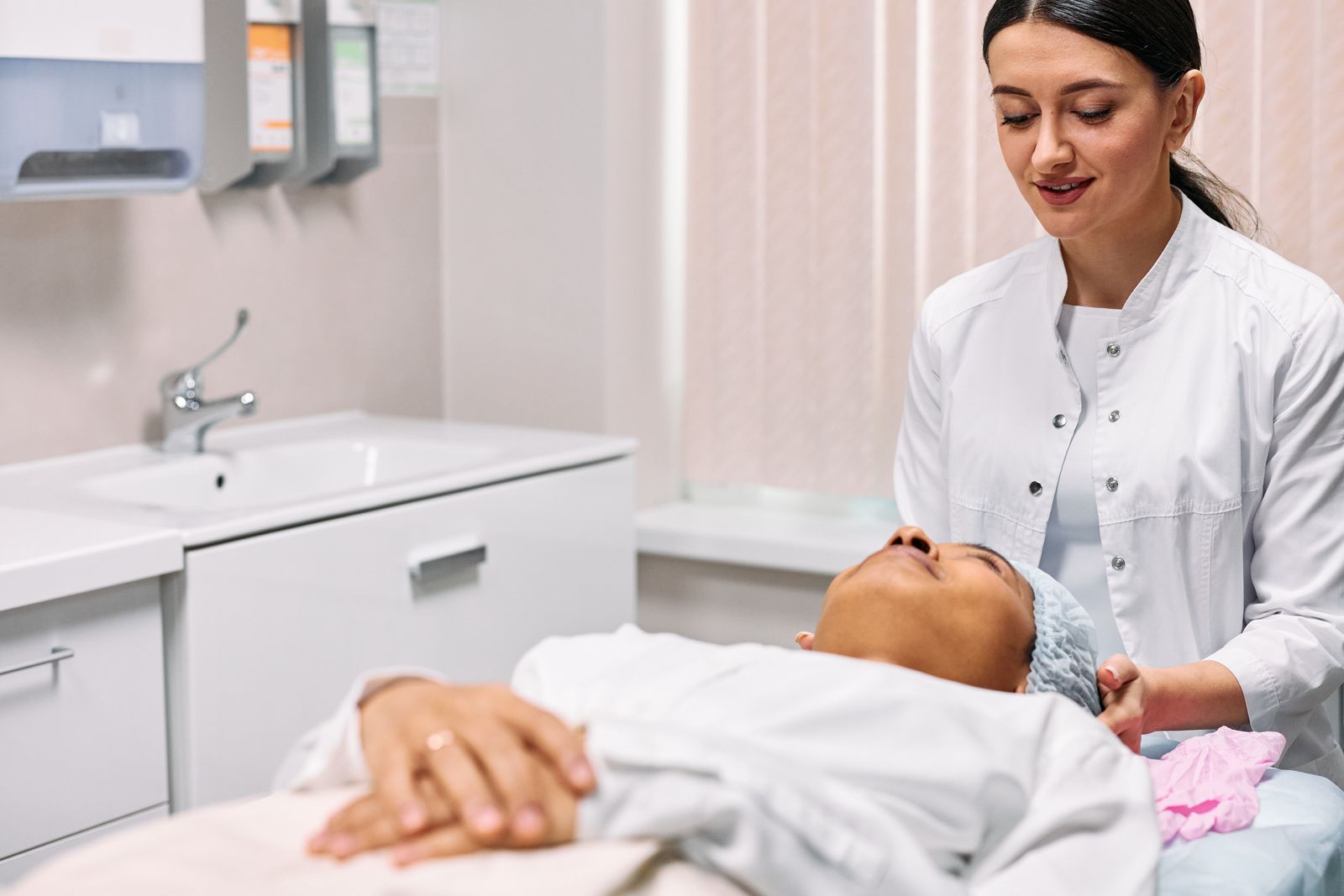
American aesthetic clinics tend to quote a bundled per-treatment price — one number, tax usually folded in, anesthesia assumed. Korean menus are built the other way around: they’re itemized by consumable and by dose.
That makes sense from inside the system. The main cost driver in most of these treatments is how much of something you need — how many pulses of ultrasound energy, how many units of toxin, how many cc of filler. A patient with a small face and mild laxity genuinely uses less than someone with heavier tissue. Rather than average that out into one price, Korean menus price the raw unit and let the total scale with you.
The practical consequence for you as a visitor: a low headline number is often just the smallest available quantity. Seeing “₩150,000” next to a lifting treatment doesn’t mean a full-face session costs ₩150,000. It usually means the smallest packaged block of shots does.
VAT: the 10% that isn’t on the sign

Korea’s value-added tax is 10%, and Korean price lists customarily show the pre-VAT price, sometimes with a small note reading 부가세 별도 (“VAT not included”). At the payment counter, 10% is added.
A few things worth knowing:
- Most cosmetic and aesthetic procedures are VAT-taxable in Korea. Lifting, injectables, pigment and hair removal treatments, skin rejuvenation and similar elective work generally fall into the taxable category.
- Medical care your doctor considers medically necessary rather than cosmetic is treated differently under Korean tax law and may not carry VAT. Whether your particular case falls on that side is a clinical and administrative judgment — ask the clinic directly rather than assuming.
- Some clinics do display VAT-inclusive prices, especially on menus aimed at international patients. If it isn’t stated either way, assume the price is pre-VAT and ask.
One update that matters if you last researched this a while ago: the VAT refund scheme that let foreign visitors reclaim tax on cosmetic procedures ended in December 2025. Don’t build a budget around getting 10% back at the airport. Confirm the current position with the clinic when you book, since tax rules do change, but plan on paying the full amount.
The one-sentence version: take any menu price and mentally add 10% before you compare anything.
Units: what “300 shots,” “1 cc,” “100 units,” and “kJ” actually mean
This is where most of the confusion lives. Korean menus name the unit; the unit tells you what you’re actually buying.
Shots (샷). Used for ultrasound-based lifting. One shot is one pulse of energy delivered at one point. A “300 shot” package is 300 of those points distributed across whatever areas you agreed on. Fewer shots spread across a larger area doesn’t mean a lighter treatment in a good way — it means thinner coverage. Ask how many shots the clinic considers appropriate for your face and your target zones, then price that number.
Lines (라인) or passes. Some thread and lifting menus price by line — one thread, one insertion track. Ten lines is not “a lifting treatment”; it’s ten threads.
Units (유닛/단위). Used for botulinum toxin. A unit is a dose measure, not a syringe. Two important wrinkles: different toxin products are not interchangeable unit-for-unit, so “50 units of A” and “50 units of B” aren’t the same purchase; and menus sometimes price by area instead (“forehead,” “jawline”), in which case you should ask how many units that area price actually covers, because area pricing varies enormously between clinics.
cc or syringe (cc / 시린지). Used for fillers and some injectable treatments. One cc is a volume, and how far one cc goes depends entirely on where it’s placed and what you’re trying to change. Menus that price “per cc” are honest about the fact that your total depends on quantity — but you can’t know quantity before an assessment.
Kilojoules (kJ) or pulses. Used for some radiofrequency and energy-based devices, which measure output as total delivered energy rather than discrete shots. Same logic as shots: more area or more depth means more energy means a higher number.
Per session (회) versus per course (회차). A course price covers a set number of sessions, usually at a lower per-session rate. See the section below on packages before you commit to one.
Per lesion (개당). Occasionally used for individual pigmented spot removal — you’re charged per spot treated, so a face with many lesions costs meaningfully more than the headline price suggests.
When you can’t tell which unit applies, the question to ask is simple and never rude: “Is this price per session, per area, or per unit — and how many will I need?”
Per session, per course, per area: three ways to price the same thing
The same treatment can appear on three different menus at three wildly different numbers because the clinics are selling different quantities.
A per-session price is the cleanest to compare across clinics, and the easiest to walk away from. A course price (say, five sessions bundled) lowers the per-session cost but locks in your money. An area price hides the unit entirely, which can be fine — or can mean a thin dose over a large area.
For treatments that only work as a series — laser hair removal is the clearest example, where a single session never finishes the job — a course price is often the realistic way to buy. But if you’re flying home in five days, a ten-session course is money you may not be able to spend. Before you buy any package, ask:
- How long is it valid? Packages usually expire.
- What happens to unused sessions? Refund policies for partially used courses vary by clinic and should be explained to you before you pay, not after.
- Can sessions be spaced across two separate trips? Sometimes yes, sometimes not.
There’s no universally right answer here. But a course only saves you money if you actually complete it.
The add-ons that quietly move the total
These are legitimate line items, not tricks — they’re just billed separately, which is unfamiliar if you’re used to bundled pricing.
Anesthesia beyond basic numbing cream. Topical cream is often included or nominal. Injected local anesthetic, a nerve block, or any form of sedation is usually a separate charge, and sedation in particular can add a substantial amount. Since comfort is one of the most common reasons visitors upgrade mid-appointment, it’s worth deciding in advance — what each level of anesthesia actually does, and what to ask for is a conversation to have before you’re on the table, not during.
Post-treatment care. Soothing masks, LED sessions, cooling or regenerative treatments after a laser — sometimes included, sometimes an optional add-on. Ask which.
Consultation fees. Many clinics don’t charge one; some do and credit it against treatment if you proceed. Ask when you book.
Prescriptions and take-home products. Korea separates prescribing from dispensing, so prescribed medication is typically bought at a pharmacy — a separate payment, not on your clinic bill. Aftercare skincare sold at the clinic is also separate.
Additional areas added on the day. If an assessment finds that treating one zone alone will look unbalanced, you may be offered a second area. That’s often sound clinical advice, but it is also a change to your bill. It’s entirely reasonable to say “not today — let me think about it.”
Card, cash, and receipts. Ask whether the quoted number is the card price. And always take an itemized receipt, in English if you can get one — you may need it for your records, for follow-up correspondence, or for any claim back home.
What actually changes your final amount
Strip everything else away and it comes down to five things:
- Quantity — how many shots, units, cc or kilojoules your face actually needs.
- Number of areas — one zone versus full face versus face and neck.
- Number of sessions — one visit versus a course.
- Add-ons — anesthesia level, aftercare, products, prescriptions.
- VAT — 10% on most aesthetic work, usually not shown on the menu.
Notice what isn’t on that list: your nationality, or how far you flew. A reputable clinic prices the treatment, not the tourist.
Rough Seoul ranges — and why they’re so wide
These are broad, approximate market ranges for Seoul, given only to calibrate expectations. They are not quotes, not clinic-specific, and not what you should budget with. Conversions use roughly ₩1,400 to US$1; check today’s rate.
- A single laser or peel session: commonly ₩50,000–₩300,000 ($35–$215)
- Botulinum toxin, one area: commonly ₩30,000–₩200,000+ ($20–$145+), varying hugely by product and unit count
- Filler, per cc: commonly ₩200,000–₩900,000 ($145–$640)
- Ultrasound lifting, around 300 shots: commonly ₩300,000–₩1,200,000 ($215–$860)
- Skin booster injections, per session: commonly ₩150,000–₩600,000 ($110–$430)
Add 10% VAT to all of the above.
Why so wide? Because the product used, the dose, the area covered, and the number of sessions all change the number — and a menu that appears cheap may simply be selling a smaller quantity. Comparing two clinics on headline price alone tells you almost nothing unless you’ve normalized for units.
How to ask for a number you can trust
A short script that works well and puts nobody on the spot:
> “Before we start — could I get the total in writing, including VAT? I’d like it broken down: how many shots or units, how many areas, how many sessions, and any anesthesia or aftercare charges. And could you tell me what’s optional versus what you’d consider necessary?”
Any clinic worth your money will do this without hesitation.
What no honest clinic can do is give you a firm total before examining you. If someone quotes you an exact all-in figure over chat, sight unseen, for a treatment where dose depends on anatomy — that number is either a minimum dressed up as a total, or it’s not accounting for what you actually need. This is the same principle behind assessment-first practice generally: at MIO Clinic, facial analysis and assessment come before any dosing decision, precisely because the dose is the price. A conservative, restraint-first approach also tends to mean fewer units than a maximalist one — which is a clinical position first, and a budget consequence second.
If a quote feels high, or you’re being pushed toward a package on the day, getting a second opinion before you commit is normal and nobody will be offended.
When a price list is worth a second look
Not red flags in a dramatic sense — just things that mean ask more questions before paying:
- No unit stated anywhere. If a lifting price doesn’t say shots or lines, you don’t know what you’re buying.
- A price far below the market range for the same named treatment. Usually it’s a smaller quantity, an entry-level bundle, or a first-visit-only rate. Sometimes it’s fine. Always ask what’s included.
- Reluctance to put the total in writing.
- A quote that changes significantly on the day without a clinical explanation you understand.
- Pressure to buy a long course on your first visit, especially if you’re leaving the country soon.
- A total quoted before anyone has examined you.
Who this pricing model doesn’t suit
Be honest with yourself: if you need a fixed, guaranteed, all-in number locked in weeks before you fly — the way you’d book a hotel — Korean unit-based pricing will frustrate you. The system is built to scale with individual need, and that flexibility is genuinely in your interest clinically, but it means the exact figure firms up at the consultation, not before.
The workable middle ground is to ask for a realistic range in advance based on what you describe and any photos you can share, treat it as a range rather than a quote, budget toward the top of it, and get the confirmed itemized total in writing on the day before anything begins. Results vary between individuals, and so, unavoidably, does the bill — but the process of arriving at the number should never be vague.
FAQ
Do Seoul clinic prices include VAT? Usually not. Korean price lists customarily show the pre-VAT figure, sometimes marked 부가세 별도. Most aesthetic procedures carry 10% VAT, added at payment. Some clinics do display VAT-inclusive prices — if it isn’t stated, assume pre-VAT and ask.
Can foreign visitors get a VAT refund on cosmetic procedures in Korea? The VAT refund program for foreign patients on cosmetic procedures ended in December 2025, so you should not budget around receiving a refund. Tax policy can change, so confirm the current position with your clinic when you book — but plan on paying the full amount.
What does “300 shots” mean on a Korean lifting menu? One shot is one pulse of energy delivered at one point on the skin. 300 shots means 300 such points spread across whichever areas you’re treating. The right number depends on your anatomy and how many zones you’re covering, so ask what the clinic recommends for you before comparing shot-count prices between clinics.
Why is the same treatment so much cheaper at one Seoul clinic than another? Most often because the two prices cover different quantities — fewer shots, fewer units, a smaller area, or an entry-level package. Product choice, session count and whether anesthesia and aftercare are included also differ. Comparing headline prices without normalizing for units and inclusions isn’t a meaningful comparison.
Is anesthesia included in the treatment price? Basic topical numbing cream often is, or costs very little. Injected local anesthetic, nerve blocks and sedation are typically separate line items, and sedation can add a significant amount. Decide what level of comfort you want before the appointment rather than upgrading on the table.
Should I buy a multi-session package on my first visit? Only if you can realistically complete it. Ask about the expiry date, the refund policy for unused sessions, and whether sessions can be spread across two trips. For treatments that only work as a series, a course can make sense — but a package you can’t finish isn’t a saving.
Can a clinic give me an exact total before I arrive in Seoul? For treatments where dose depends on your anatomy, no honest clinic can give a firm final figure without examining you. A realistic range in advance is reasonable; an exact all-in quote sight-unseen usually means a minimum price presented as a total. Get the confirmed itemized number in writing on the day, before treatment begins.
Book at MIO Clinic, Gangnam
Seoul Skin Notes is the official journal of MIO Clinic, a skin & aesthetic clinic in Gangnam, Seoul. The MIO team handles consultations and bookings in English over WhatsApp — tell them what you are considering and they will walk you through your options.
MIO Clinic
2-3F, FINE TOWER, 372 Gangnam-daero, Gangnam-gu, Seoul
Gangnam Station, Exit 4 — 3-minute walk
Hours: Mon & Fri 10:00–21:00 · Tue–Thu & Sat 10:00–19:00 · Sun closed
Web:mioclinic.kr/en · Instagram:@mioclinic_global · Email:en-official@mioclinic.kr · Google Maps