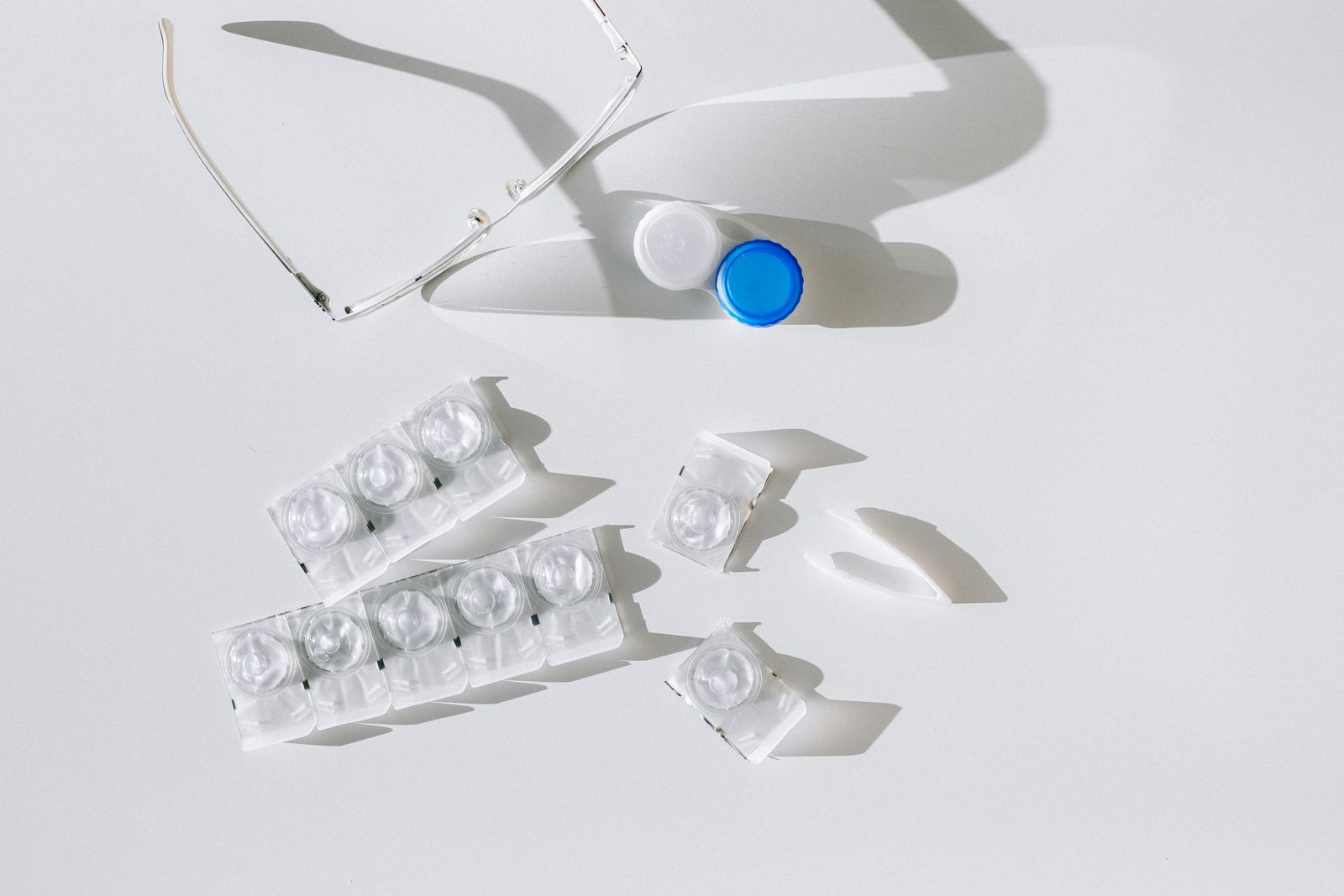
Before most treatments near your eyes, expect to take your contact lenses out: eye-area lasers, lifting devices such as HIFU or radiofrequency, and often injections around the eyes. Clinics in Seoul usually ask for this because your eyes need protection during treatment. That might be goggles, opaque pads or, for some devices, a small shield placed directly on the eye, and a lens can get in the way. Numbing cream, antiseptic and swelling also don’t mix well with a lens. So bring your glasses, a lens case and solution, and before you leave, ask when you can wear lenses again. The answer depends on the treatment, and it’s usually not “right away.”
The rest of this guide explains why, how your eyes are protected, and what to ask.
Why do clinics ask you to remove contact lenses before eye-area treatments?

The main reason is eye protection. Anything that sits on your eye or holds your eyes closed for a while works better and more safely without a lens underneath. There are several practical reasons too:
- Internal eye shields. For some lasers and radiofrequency treatments close to the eyelids, clinics may place a small smooth shield directly over the eye, under the lids, after numbing drops. That can’t be done over a contact lens.
- Numbing cream and cleansers. Topical anaesthetic and antiseptic are applied close to the lash line, and some can move toward the eye. A lens can trap that residue against your eye and keep it there.
- Eyes closed for a long time. Eye-area treatments often mean 20–40 minutes or more with your eyes closed under pads or goggles. Soft lenses can dry out and feel stuck when you open your eyes.
- Swelling and tenderness afterwards. Putting a lens in means pulling on the lids. On freshly treated, numb or swollen skin, that’s uncomfortable, and it’s the opposite of the “don’t rub or press” advice most aftercare sheets give.
- Heat and light. Lasers and energy devices create heat near the eye. Clinics prefer nothing extra on the eye surface while that happens.
Not every treatment needs the same caution. A quick botox injection at the outer corner of the eye is different from a laser treatment along the lash line. Some clinics only ask you to remove lenses for treatments right next to the eyes. Others ask everyone, to keep things simple. If you’re not sure, just take them out. It costs you nothing.
Which treatments usually involve the eye area?

These are the treatments where lenses tend to come up, roughly from most to least likely to require removal:
- Eyelid and under-eye lasers and pigment toning near the lash line or on dark circles.
- Eye-specific lifting devices. Many Seoul clinics offer smaller “eye” versions of Thermage, Ultherapy, Shurink or Oligio, priced by shot count, for the upper lid, crow’s feet and under-eye.
- Full-face lifting that includes the area around the eyes or the temples.
- Skin boosters injected under the eyes, sometimes with a needle and sometimes with a device.
- Under-eye filler for hollows or tear troughs.
- Botox for crow’s feet or the lines between the brows, which is quick and usually the least demanding about lenses.
If your plan combines a full-face device and something under the eyes in one visit, assume you’ll need to remove lenses for the whole appointment.
How are your eyes protected during laser and lifting treatments?
You should expect eye protection whenever a laser or energy device is used on your face. It’s standard practice, not an extra. Depending on the device and how close it gets to your eyes, you’ll usually get one of these:
- Laser goggles or opaque eye pads over closed eyes, for most facial lasers and toning.
- Small adhesive or metal eye covers that sit on the closed lids.
- Internal corneal shields under the lids, used by some clinics for treatments very close to the lash line. Numbing drops go in first. They feel strange but usually aren’t painful, and this is exactly why lenses have to come out.
It’s reasonable to ask, before you lie down, “How will my eyes be covered during this?” A good clinic answers that easily. If you have a history of eye surgery (LASIK, SMILE, cataract surgery), dry eye, glaucoma or a recent eye infection, mention it at this point too, along with any past reactions to numbing drops. Our guide on which allergies and past reactions to mention before treatment covers how to write this down for reception.
Should you bring glasses to a Seoul clinic appointment?
Yes. If you normally wear lenses, bring your glasses in your bag even if you plan to arrive with lenses in. You’ll likely need them for:
- Reading the consent form and price sheet before you sign. It’s harder to read fine print once you’ve taken your lenses out.
- Looking in the mirror while the doctor marks injection points or discusses the plan.
- Getting back to your hotel. Gangnam’s stations are big and busy, and finding the right exit on blurry vision after numbing cream isn’t much fun.
- Reading the aftercare sheet before you leave. Our guide to reading a Seoul clinic aftercare sheet explains what to check.
Also pack a lens case and a small bottle of solution, so you can take your lenses out at the clinic without throwing them away. If you wear daily disposables, bring a fresh pair for later. Clinics usually have a spot to remove lenses, but they may not have solution or cases.
A small practical tip: if your glasses have heavy frames, they may press on the temples or the bridge of the nose, which can bother you after lifting or injections there. Lighter frames or a quick check of where the arms rest is worth a thought.
Coloured lenses, circle lenses and lash extensions
Coloured and circle lenses are popular on trips to Seoul. For treatment purposes they count the same as clear lenses: take them out. Because they’re often worn longer and can be more drying, some clinics are stricter about them afterwards.
Lash extensions and lash glue don’t stop most treatments. But they can make it harder to clean around the lash line, they can get in the way of eye pads, and heat from some devices near the lids isn’t kind to them. If you’ve just had extensions done, mention it when you book. Remove eye makeup, especially waterproof mascara, before you arrive, or plan to use the cleansing station.
When can you wear contact lenses again after treatment?
There’s no single rule. It depends on what was done, so ask before you leave. The guidance you’ll commonly hear is:
- Botox around the eyes: often the same day, once you can put lenses in gently without rubbing or pressing the injected area. Many clinics ask you to avoid pressing on it for the first few hours.
- Facial lasers and toning that didn’t involve the lids: often later the same day or the next morning, once any redness near the eyes has settled.
- Lasers or lifting close to the eyelids, or anything that used internal shields or numbing drops: commonly the next day. Clinics generally want the numbing to wear off completely first, because a numb eye can’t tell you when something is wrong.
- Under-eye filler or under-eye skin boosters: usually not until swelling and tenderness have eased, which is often a day or more. Pulling the lower lid down to insert a lens presses on exactly the treated area.
Whatever you’re told, these are reasons to stay in glasses longer and contact the clinic: your eye feels gritty or painful, your vision is blurred and doesn’t clear when you blink, there’s discharge, or the white of the eye turns red rather than just the skin around it. Don’t put a lens into an irritated eye to “see if it settles.”
If you’re flying home soon after treatment, remember that cabin air is very dry and lenses feel worse on a plane anyway. Glasses for the flight are the easy choice. Swelling and bruising also affect when you can wear lenses comfortably. Our guide on bruising after botox, filler or skin boosters covers how long it usually shows.
What to ask the clinic, in one list
Save these on your phone before the appointment:
- “Do I need to take my lenses out for this treatment, or only for part of it?”
- “How will my eyes be protected? Goggles, pads or shields on the eye?”
- “Will you use numbing drops in my eyes?”
- “When can I wear contact lenses again, and when can I wear coloured lenses again?”
- “What eye symptoms should make me message you?”
- (Mention, don’t ask) any eye surgery, dry eye, glaucoma, recent infection or reaction to eye drops.
Who should take extra care
Treatment near the eyes isn’t automatically a bad idea in these situations, but each one is worth raising with the doctor first rather than finding out on the table:
- You have an active eye infection, stye or conjunctivitis. Most clinics will postpone treatment near the eyes.
- You’ve had eye surgery in the past few months. Your eye surgeon’s guidance comes first.
- You have significant dry eye or rely on lenses all day and can’t manage without them. Plan a day in glasses.
- You can’t tolerate eye shields or drops. Some lid-adjacent treatments may then not be suitable, and the doctor may suggest staying further from the lash line.
If you’re considering eye-area treatment at MIO Clinic
Seoul Skin Notes is run by MIO Clinic. If you want one of the eye-area options described above, MIO Clinic in Gangnam is one option, and its published menu lists eye-specific lifting by shot count. The menu lists Eye/Derma Shurink 100 shots (KRW 39,000, about USD 28), Eye Oligio 200 shots (KRW 390,000, about USD 280), Eye/Derma Ulthera 100 shots (KRW 399,000, about USD 285), which uses numbing and which MIO advises scheduling on the last day of a trip, and Eye Thermage 225 shots (KRW 1,190,000, about USD 850), described as a brief sting. For under-eye hollows there’s Under-Eye Filler (Belotero Soft), priced per area at KRW 349,000 (about USD 250). It uses numbing, and MIO suggests booking it early in a trip. These are the prices as published at the time of writing. They exclude VAT, choosing a specific doctor adds KRW 100,000 (about USD 70), and USD figures are approximate at roughly KRW 1,400 to the dollar. The final plan depends on your face and can’t be quoted in advance.
MIO’s doctors are experienced and each has a main area. Lifting and contouring are a focus for Shin Seungyong, and Jung Guhyun’s work covers lifting, filler and botox, so ask at consultation which doctor handles eye-area lifting. Consultations use detailed clinical photography and AI-assisted facial analysis to inform the doctor’s plan, which helps when the question is how close to the eyes a device should go. It’s also a good moment to ask all of the lens questions above.
FAQ
Do I have to remove contact lenses before botox around the eyes? Not always. Botox for crow’s feet is quick and doesn’t involve covering the eyes, so some clinics let you keep lenses in. Others ask everyone to remove them. Avoid rubbing the area when you put lenses back in afterwards.
Why do some clinics put a shield directly on my eye? For lasers or radiofrequency used very close to the lash line, a small shield under the eyelids protects the eye better than goggles. Numbing drops are used first, and the shield can’t be placed over a contact lens.
Can I wear coloured or circle lenses on the day of treatment? Take them out for the treatment, the same as clear lenses. Because they can be more drying, it’s sensible to wait at least as long as for clear lenses before wearing them again, and to ask the clinic.
When can I put my contact lenses back in after an eye-area laser? Commonly the next day if the treatment was close to the lids or used numbing drops, sometimes later the same day if it wasn’t. Ask the clinic for your specific treatment, and stay in glasses if your eye feels gritty, sore or blurred.
Should I bring glasses even if I plan to wear lenses to the appointment? Yes. You’ll need them to read the consent form and aftercare sheet, check the mirror, and get back to your hotel once your lenses are out. Bring a lens case and solution too.
Book at MIO Clinic, Gangnam
Seoul Skin Notes is the official journal of MIO Clinic, a skin & aesthetic clinic in Gangnam, Seoul. The MIO team handles consultations and bookings in English over WhatsApp — tell them what you are considering and they will walk you through your options.
MIO Clinic
2-3F, FINE TOWER, 372 Gangnam-daero, Gangnam-gu, Seoul
Gangnam Station, Exit 4 — 3-minute walk
Hours: Mon & Fri 10:00–21:00 · Tue–Thu & Sat 10:00–19:00 · Sun 10:00–19:00
Web:mioclinic.kr/en · Instagram:@mioclinic_global · Email:en-official@mioclinic.kr · Google Maps