Before any injection, laser or peel in Seoul, tell the clinic about anything your body has reacted to. That means numbing cream or local anesthetic (including at the dentist), latex gloves, adhesive tape or bandages, antibiotics and antibiotic ointments, skin disinfectants, and any past reaction to fillers, botox, skin boosters, peels or skincare. The simplest way is a short written list in English that you hand over at reception, so it gets into your chart before the numbing cream goes on. Mention a reaction even if it seemed minor or you’re not sure what caused it. A clinician can work around a reaction they know about, but they can’t plan for one you leave out.
Why do Seoul clinics ask about allergies before even a “simple” treatment?
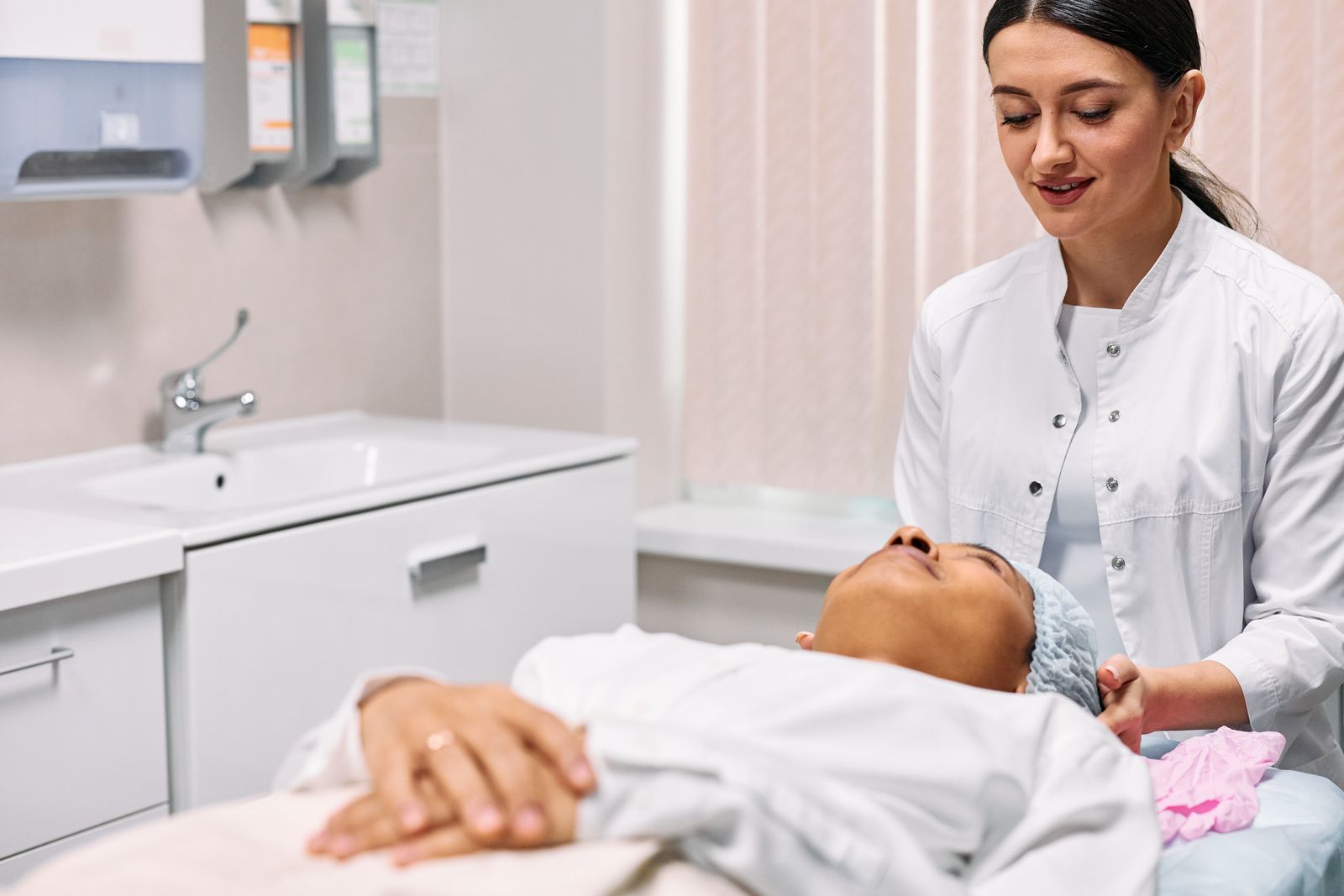
They ask because even quick, low-downtime treatments use more than the device or the syringe. A 20-minute skin booster session can involve a topical anesthetic, an alcohol or chlorhexidine wipe, gloves, a filler or booster that contains lidocaine, a soothing mask, a post-care cream and sometimes a patch or tape. Each of those is a possible trigger for someone.
Most Seoul clinics give you an intake form on your first visit, and most of them ask about allergies. The form is often short, though, and staff may be moving quickly. If you write “no” because nothing comes to mind in the moment, the clinic goes ahead on that answer. A list you prepared in advance is more reliable than your memory at a reception desk after a long flight.
Numbing cream and local anesthetic: what’s worth mentioning?
Mention any reaction to numbing cream, dental anesthetic, or an injection that was meant to numb an area, plus anything that happened afterward. Numbing creams in Korean clinics usually contain amide-type anesthetics such as lidocaine, sometimes combined with prilocaine or tetracaine. Many hyaluronic acid fillers and some boosters also contain lidocaine already mixed into the product.
True allergy to amide local anesthetics is uncommon. Reactions that people remember as “allergy” are often something else: a racing heart from adrenaline added to a dental injection, a faint from anxiety, or contact irritation from a cream left on too long. The clinic still needs to hear about all of these, because each is handled differently:
- A rash, hives or swelling where a numbing cream was applied: the clinic may shorten the application time, use a different product, or skip topical numbing.
- Feeling faint, shaky or sick after dental anesthetic: worth saying, because it changes how they position you and how closely they watch you. (If needles themselves make you faint, our guide to telling a Seoul clinic about needle anxiety or fainting goes into that.)
- A diagnosed allergy to a specific anesthetic: give the name if you know it. If you don’t, say “a local anesthetic used at the dentist in [year]”. That’s still useful.
If you know you shouldn’t have lidocaine, ask directly whether the filler or booster you’re being offered has lidocaine in the syringe. The numbing cream isn’t the only source.
Latex, adhesive tape and disinfectants: the easy ones to forget
These belong on your list even though they seem minor, because they come up in almost every visit.
- Latex: gloves in Korean clinics are commonly nitrile now, but not always. If you react to latex, say so at reception so it can be confirmed before anyone touches your face.
- Adhesive tape and patches: after mole removal, small procedures or some injections, clinics often put on a hydrocolloid patch or tape. If plasters or medical tape have left you with red, itchy, blistered skin before, tell them, so they can use a different dressing or none.
- Disinfectants: alcohol wipes and chlorhexidine are standard before injections. If either has made your skin sting badly, peel or break out in a rash, mention it. Most clinics have more than one option.
Antibiotics and medicines you might be given afterward
Tell the clinic about any antibiotic allergy, even if you think the treatment won’t need one. After procedures that break the skin, such as mole removal, some microneedling, or a filler complication that needs managing, Seoul clinics sometimes recommend an antibiotic ointment or prescribe oral antibiotics. If a penicillin- or sulfa-type allergy is already in your chart, nobody has to remember it on a busy afternoon.
Include ointments too. Some people react to common antibiotic creams and assume it was “just irritation”. Medications you take regularly are a separate question, covered in our guide to medications and supplements to mention before botox, filler or laser. Allergies and current medications are two different lists, and you should bring both.
Past reactions to injections: filler, botox, boosters and hyaluronidase
Any unusual reaction to a previous injectable is among the most useful things you can tell a clinic. Examples:
- swelling that came back weeks or months after filler, or lumps that were treated with steroids or antibiotics
- a reaction to hyaluronidase (the enzyme used to dissolve hyaluronic acid filler), which some people react to
- rash, unusual swelling or flu-like symptoms after botox
- redness, bumps or long-lasting swelling after a skin booster or collagen-stimulating injection
Give whatever you know: roughly when it happened, which area, the product name if you have it, and what was done about it. “Under-eye filler, 2024, lumpy and swollen for weeks, dissolved” is far more useful than “I had a problem once”. If you have old receipts or product stickers, bring photos of them. Our consultation checklist covers which records are worth bringing.
A past reaction doesn’t automatically rule you out. Often it changes the product, the dose, the area or the timing. But that decision belongs to the clinician, and they can only make it if they know.
Past reactions to skincare, peels and lasers
Mention skincare reactions too, because peels and post-laser care use many of the same ingredients. Note anything that has burned, peeled badly or caused a rash:
- retinoids (retinol, tretinoin), vitamin C serums, or acids such as glycolic or salicylic acid
- fragrance, essential oils or specific sunscreens
- a past chemical peel that left you redder or darker for weeks
- dark marks after a laser (post-inflammatory hyperpigmentation), or a tendency to scar thickly
Strictly speaking these aren’t all allergies, and that’s fine. The clinic wants to know how your skin behaves, not just what it’s formally allergic to. Two more things to add even though they aren’t allergies: a history of cold sores, because some laser and needle treatments can trigger an outbreak, and any condition like eczema or rosacea that flares easily.
How to write a short list to show at reception
Keep it to one screen or a half-page and write it before you fly. Put it on your phone as a note or photo and also carry a printed copy. A useful structure:
- Allergies (confirmed): substance + what happened. “Penicillin – hives.”
- Reactions (not sure of cause): situation + what happened + when. “Dental anesthetic, 2023 – heart racing, felt faint.”
- Contact reactions: latex, tape, disinfectant, specific creams.
- Past injectable reactions: area, product if known, what happened, how it was treated.
- Skin tendencies: cold sores, dark marks after laser, keloids, eczema, rosacea.
- Emergency history: any time you needed an EpiPen, an emergency room or a hospital stay for a reaction. Put this on the first line if it applies.
Plain English works well at most Seoul clinics used to international patients. If you’d like a backup, a translated line can go at the top. The Korean word for allergy is 알레르기, and “저는 ___ 알레르기가 있어요” means “I am allergic to ___”. If you add Korean, keep the English underneath so the clinician can check the details.
Hand the list over when you check in, not after the numbing cream is already on. Then ask, “Has this been added to my chart?” That’s a normal question and nobody will mind it.
Why an honest history matters more than a quick appointment
It’s tempting to skip details so you don’t slow things down, especially with a tight trip schedule or a queue at reception. But writing “none” to save five minutes is a bad trade. A reaction you mentioned can usually be planned around: a different numbing product, no tape, a non-lidocaine filler, a patch test, or a different treatment. A reaction you didn’t mention can only be handled after it happens, possibly in a city where you have no doctor of your own and a flight in two days.
Being honest also includes saying “I’m not sure”. You don’t have to diagnose yourself. “My face swelled after something at a spa, I never found out what” is a perfectly good entry. The clinician decides what matters. You just need to give them the information.
Finally, a reaction isn’t something to be embarrassed about, and it doesn’t make you a difficult patient. Clinics see allergy notes every day. The patient who causes problems is the one who said “no allergies” and wasn’t sure.
Getting assessed at MIO Clinic if you have a reaction history
Seoul Skin Notes is run by MIO Clinic. If you want a clinic that reads your allergy and reaction list before deciding on numbing, product and dose, MIO Clinic in Gangnam is one option. Here are the MIO facts that matter for this topic, with prices as published at the time of writing. They exclude VAT, and choosing a specific doctor adds KRW 100,000.
- Which treatments involve numbing. MIO’s menu marks whether each treatment uses numbing. Ultherapy Prime 300 shots (KRW 1,090,000, about USD 780) and Rejuran Healer 2cc (KRW 189,000, about USD 135) are listed with anesthesia. Treatments such as PicoSure Toning + Mask (KRW 39,000, about USD 28) and ONDA 20kJ (KRW 99,000, about USD 70) are listed without it. If you’ve reacted to numbing cream before, that difference is worth asking about.
- Filler, lidocaine and dissolving. MIO’s filler is priced per area, in an imported tier (Juvéderm, Restylane, Belotero) and a domestic tier. If you’ve reacted to filler or to dissolving before, tell them. MIO lists Hyaluronidase at KRW 50,000 (about USD 36) for filler placed at MIO and KRW 100,000 (about USD 72) for filler placed elsewhere. MIO schedules both filler and hyaluronidase for the first day of a trip, which leaves time to see how your skin responds before you fly.
- Who looks at it. MIO’s doctors are experienced, and all four consult in English. Jung Guhyun, the medical director, focuses on botox, filler, lifting, skin boosters and lasers. Kim Doyoung focuses on skin boosters, lasers, pigmentation and acne, so a history of skincare or laser reactions fits that area. Assignment happens at booking, so ask at consultation who will review your history.
- Analysis before planning. MIO assesses each face with detailed clinical photography and AI-assisted facial analysis before the doctor builds a plan. The skin analysis scan carries no additional charge. The analysis informs the plan, and the doctor still decides, with your reaction history in front of them.
Nothing here guarantees you won’t react, and individual responses vary. What it does mean is that the conversation about your history happens before treatment, not after.
FAQ
Do I need to mention a reaction if I’m not sure what caused it? Yes. Describe what happened, when, and what you were exposed to around that time. The clinician can decide whether it’s relevant. Leaving it out removes that option.
Is a lidocaine allergy common? True allergy to amide local anesthetics like lidocaine is uncommon. Many remembered “reactions” are fainting, a racing heart from added adrenaline, or skin irritation. Mention it anyway, because each of these is handled differently, and some fillers contain lidocaine in the syringe.
Can a clinic do a patch test before treatment? Some clinics can test a numbing cream or skincare product on a small area if you ask, but practice varies and a patch test doesn’t rule out every reaction. Ask at consultation, ideally early in your trip so there’s time to wait for a result.
Should I write my allergy list in Korean? English is usually understood at Seoul clinics that see international patients. Adding one Korean line, such as “저는 ___ 알레르기가 있어요” (“I am allergic to ___”), can help at reception, but keep the full details in English.
What if I react after I’ve already flown home? Contact the clinic with photos and a description, and see a local doctor for anything urgent such as spreading swelling, breathing difficulty or a fever. Bring your treatment record, with product names and areas, so the doctor at home knows what was used.
Book at MIO Clinic, Gangnam
Seoul Skin Notes is the official journal of MIO Clinic, a skin & aesthetic clinic in Gangnam, Seoul. The MIO team handles consultations and bookings in English over WhatsApp — tell them what you are considering and they will walk you through your options.
MIO Clinic
2-3F, FINE TOWER, 372 Gangnam-daero, Gangnam-gu, Seoul
Gangnam Station, Exit 4 — 3-minute walk
Hours: Mon & Fri 10:00–21:00 · Tue–Thu & Sat 10:00–19:00 · Sun 10:00–19:00
Web:mioclinic.kr/en · Instagram:@mioclinic_global · Email:en-official@mioclinic.kr · Google Maps