
A before-and-after photo tells you how a face looked in two particular moments, under two particular sets of conditions. It does not tell you what result you should expect. Lighting, camera angle, distance, makeup, expression and the number of days since treatment can each change how dramatic a pair looks, sometimes more than the treatment itself did. Reviews work the same way. A review becomes useful when it names the device or product, says how much was used, and says how many days after treatment the writer is describing. If those three details are missing, read the review as one person’s mood rather than as evidence. This guide covers what to check in photos, what to look for in reviews, why a single striking image proves little, and how to ask a Seoul clinic for examples that actually apply to you.
Why can a face look “improved” in a photo when nothing has changed?
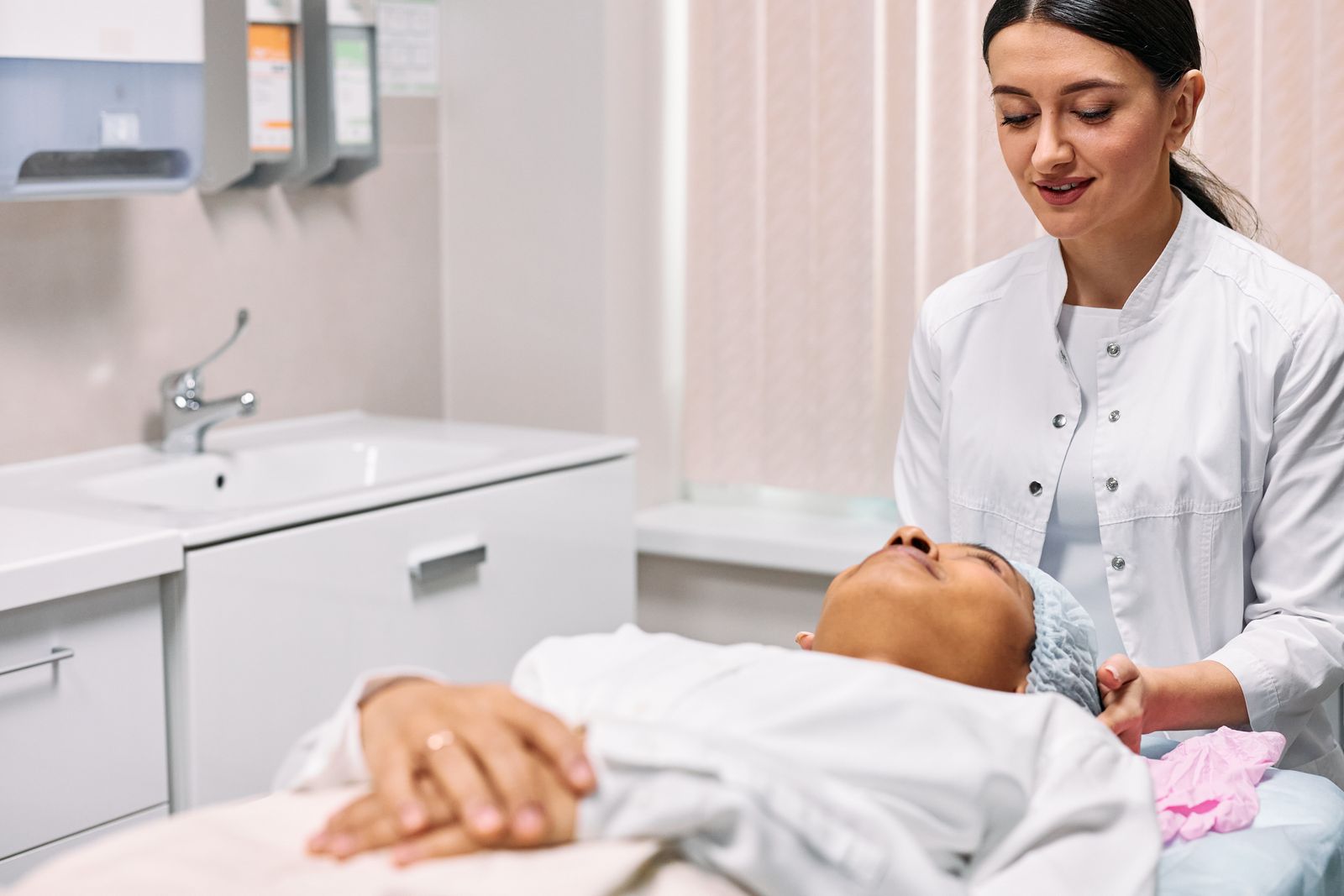
Small shifts in how a photo is taken can produce a visible “result” before any treatment has happened. If you know what to look for, you can spot these in a few seconds.
Lighting. Light from directly in front flattens a face, so fine lines, texture and under-eye hollows fade. Light from above or the side deepens every shadow, which makes folds, jowls and dark circles look heavier. When the “before” is lit from above and the “after” is lit from the front, the pair shows a lighting change. Check where the shadows fall under the nose, under the chin and in the nasolabial folds. If the shadows point in different directions in the two shots, the light moved.
Angle and head position. Lowering the chin a little pushes soft tissue down and makes the jawline look softer. Raising it slightly tightens the neck and sharpens the jaw. Turning the head a few degrees can change how full the cheeks look and how the nose bridge reads. Lifting and contouring photos are the most affected. Compare where the ears sit in each frame. If more of one ear shows in one photo, the head turned.
Distance and lens. A phone held close to the face enlarges the nose and the middle of the face and narrows the edges. Stepping back makes the face look slimmer. A “before” taken at arm’s length next to an “after” taken from a couple of metres away can suggest a slimmer face that never existed.
Makeup, skin prep and editing. Foundation, concealer, a fresh sheet mask or moisturiser just before the shot all make skin look smoother and brighter. For skin-quality treatments such as laser toning, skin boosters or peels, the “after” should be bare-faced if the “before” was. Filters and retouching are the obvious problem. Smaller edits are harder to see: higher brightness, less contrast, slightly blurred texture.
Expression and hair. A slight smile lifts the cheeks. A relaxed or tired face looks heavier. Hair pulled back on one day and left down on the other changes how wide the face looks.
None of this has to be deliberate. Plenty of people take their “before” in a bathroom mirror at night and their “after” by a window in the morning. The result is still a misleading comparison.
How does timing change what an “after” photo shows?

Two photos of the same treatment can look completely different depending on the day the “after” was taken. That makes “how many days after?” the most important question you can ask about any result.
- Filler, first few days. Swelling makes an area look fuller than it will look once it settles. Lip and under-eye filler photos from day one or two often look more dramatic than the final result. Bruising can also be hidden with makeup. Our guide to what the first two weeks after filler usually look like covers the normal course in more detail.
- Botox. Wrinkle and contouring botox takes time to work. A photo taken two or three days after injection may show no change yet. Masseter (jaw-slimming) botox changes the face shape gradually over weeks, not days. An “after” taken too early understates the effect, and one taken months later may show it already wearing off.
- Lifting and collagen-stimulating devices (such as focused-ultrasound and radiofrequency treatments). Some people see a mild immediate tightening, partly from temporary swelling. The collagen remodelling these devices aim for builds over weeks to months, so a same-day “after” tells you little about where you end up.
- Skin boosters and peels. Skin often looks glowy or plump for a few days because of hydration and mild swelling. A photo from day two can look better than week four, or worse if there is still redness or small injection bumps.
- Laser for pigmentation. Pigment can look darker for a while before it fades, and some concerns, melasma in particular, need several sessions and can come back. A photo from one session tells you very little.
A trustworthy pair says when each photo was taken. A day-one “after” for a treatment whose result takes months says almost nothing either way.
What does a trustworthy before-and-after pair look like?
You do not need a professional studio to judge a photo. Run through these checks:
- Same light, same angle, same distance. Background, shadow direction, ear position and face size in the frame should match.
- Same expression and bare skin for skin-quality treatments. Hair should be pulled back the same way in both.
- Stated time point. “3 weeks after” or “4 months after” is useful. “After” on its own is not.
- Stated treatment and amount. The device or product name and how much was used: shot count, cc, units or number of areas.
- More than one angle. Front, three-quarter and profile together are much harder to stage than a single front shot.
- The change matches what the treatment can do. If a single lifting session appears to remove deep jowls completely, or a non-surgical treatment appears to change bone structure, something besides the treatment is probably involved.
If a pair fails three or four of these checks, you can enjoy looking at it, but do not plan your budget or your expectations around it.
Why does one dramatic photo say so little?
Even if a photo is completely honest, it is still one person’s best outcome, picked from many. Clinics, influencers and reviewers all naturally share their strongest results. A gallery shows you the upper end of what is possible. It does not show you the typical result, and it shows you nothing about the outcomes nobody posted.
Results also depend on where each person starts. Someone with good skin elasticity and mild laxity can respond very visibly to a lifting device. Someone with heavier tissue or more advanced sagging may see a subtler change from the same treatment. A striking photo of someone whose face, age and concern differ from yours tells you even less.
The useful question changes from “Is this result real?” to “How often does something like this happen for someone like me, and what does an average or weaker result look like?” A clinic that answers that question honestly is giving you more than a gallery can.
What should a useful online review actually contain?
Most reviews describe a feeling: friendly staff, a nice room, “my skin is glowing.” Those details can help you judge the visit itself, but they tell you little about the treatment. When you are trying to judge a result, look for reviews that include most of the following:
- The device or product name. “Ultherapy” or “Thermage” rather than “lifting laser”. For filler, the brand or at least whether it was an imported or domestic line. Different clinics sometimes use different names for similar kinds of devices. Our explainer on comparing menus that use different brand names can help you sort out what is being compared.
- The amount. Shots for lifting devices, cc for skin boosters and some fillers, units or areas for botox, the area for filler. “Did Ultherapy” without a shot count is close to meaningless when menus can list 100, 300 and 600 shots.
- The time point. “Week 2”, “two months later”. Reviews written on the day of treatment mostly describe how the visit felt, not the outcome.
- Downtime and side effects as they happened. Swelling, bruising, numbness, how long it lasted, whether makeup covered it. A review that mentions some downside is usually more believable than one with none.
- Where the reviewer started. Age range and main concern help you judge whether their result might apply to you.
Treat these as warning signs, not proof that a review is fake: very generic praise, several reviews with the same phrasing posted close together, no treatment details at all, or a result described in terms the treatment cannot deliver (“my jowls are gone after one session”).
A note on incentives and translations
Some clinics, in Korea and elsewhere, offer a small benefit for writing a review or posting photos. That does not make a review false, but it does mean happy patients are more likely to post. On booking apps and map platforms, sort by newest rather than “most helpful” so you see the full spread, including middle-of-the-road ratings.
If you are reading Korean reviews through a translation tool, be careful with treatment names and amounts. Translation software regularly garbles device names and units, and a mistranslated shot count or product name can change the whole meaning of a review.
Why might a Seoul clinic show fewer before-and-after photos than you expect?
Overseas visitors are sometimes surprised that Korean clinic websites show fewer public before-and-after galleries than clinics in other countries. Korean medical advertising rules restrict how clinics may use comparison photos in advertising, and some clinics keep public galleries small as a result. A thin gallery is therefore not a reason on its own to doubt a clinic. A gallery full of perfect, dramatic transformations is also not proof of quality.
This makes the consultation the right place to look at examples, because a clinic can talk you through cases face to face and explain them.
How do you ask a clinic for its own examples?
When you ask, be specific. Generic requests get generic galleries.
- Ask for cases like yours. “Do you have examples of patients around my age with a similar concern who had this treatment?”
- Ask for the details along with the photo. The device, the amount used and how long after treatment each photo was taken.
- Ask for a typical result, not only the best one. “What does an average result look like? And a result where the patient was less satisfied?” A clinic that can answer the second question is being honest with you.
- Ask how photos are taken. Whether the clinic photographs every patient in the same setup and lighting before and after. Consistent clinical photography is what makes a comparison meaningful.
- Ask whether you can see your own photos. If the clinic photographs you at consultation, ask whether those images will be used to compare your result later and whether you can see them.
- Ask when to judge your result. For botox, collagen-stimulating devices and multi-session laser, the clinic should be able to tell you when a fair comparison can be made. That date may fall after your flight home.
If you want to start this conversation before you travel, our guide to sending photos to a Seoul clinic before you fly explains what a remote pre-consultation can and cannot settle.
How do you make your own photos a fair benchmark?
The most honest before-and-after you will ever see is your own, taken under the same conditions each time. Before treatment:
- Stand facing a window during daylight, with no overhead light on. Use the same spot and roughly the same time of day each time.
- Use a bare face with hair pulled back and a neutral, relaxed expression.
- Take photos from the front, both three-quarter angles and both profiles, with the phone at eye level and the same distance away. Propping the phone on a shelf helps.
- Repeat the same set at the points that matter for your treatment, for example day 3, week 2, week 4 and month 3.
This takes about two minutes. It protects you from your memory, which tends to forget what you looked like before, and from the mirror’s daily changes. It also gives you something concrete to show the clinic if you need a follow-up after you are home.
If you want a clinic that bases its plan on consistent photography: MIO Clinic
Seoul Skin Notes is run by MIO Clinic.
If you want the comparison to start from measured, consistent images rather than a quick look in the mirror, MIO Clinic in Gangnam is one option. Before planning treatment, MIO assesses the face using detailed clinical photography and AI-assisted facial analysis, so the proposal is based on recorded data from your own face. The analysis supports the doctor’s plan; it does not diagnose and does not guarantee an outcome. MIO’s published FAQ states that the skin analysis scan has no additional charge, and an English-speaking interpreter is available.
To give a concrete example of the “name the device, name the amount” point, MIO’s menu lists lifting by device and shot count. Ultherapy Prime 300 shots is listed at KRW 1,090,000 (about USD 790) and Ultherapy Prime 100 shots at KRW 399,000 (about USD 290). Both require numbing. Filler is priced per area and per tier, for example Nose Filler at KRW 399,000 (about USD 290) for the imported line (Juvéderm, Restylane, Belotero) and KRW 159,000 (about USD 115) for the Domestic line. MIO’s own trip guidance puts filler on the first day of a trip. Prices are as published at the time of writing and exclude VAT. Choosing a specific doctor adds KRW 100,000 (about USD 72). Dollar figures are approximate and move with the exchange rate. Your final cost depends on your assessment.
MIO’s doctors are experienced clinicians, and each has a main area of focus. For lifting, the published focus areas of Jung Guhyun (medical director) and Shin Seungyong both include lifting, and both see patients in English. At consultation, ask which doctor handles your concern, and ask the questions from the section above: examples like yours, the time point of each photo, and what a typical result looks like.
FAQ
Are before-and-after photos on clinic websites edited?
Some may be, but the bigger and more common problem is inconsistent conditions: different lighting, angle, distance, makeup or timing. Check that shadows, head position and framing match, and that the time after treatment is stated. A pair that changes several of these at once tells you little.
How long after a treatment should an “after” photo be taken?
It depends on the treatment. Filler is best judged after swelling settles, usually a couple of weeks. Botox needs around two weeks for wrinkles, and longer for jaw slimming. Lifting and collagen-stimulating devices are judged over months. Ask the clinic when a fair comparison can be made for your specific treatment.
What is the single most useful detail in a review?
The amount, together with the device or product name: shots, cc, units or areas. Without the amount, you cannot tell whether the reviewer’s result relates to the option you are considering. The number of days after treatment is a close second.
Why does a Korean clinic’s website show fewer before-and-after photos?
Korean medical advertising rules restrict how clinics can use comparison photos in advertising, so public galleries are often smaller than overseas visitors expect. Ask to see examples at consultation instead, along with the treatment details and time point for each one.
Can a clinic show me what my own result will look like?
No clinic can promise a specific result. Responses vary from person to person. A clinic can show you comparable cases, explain what is realistic for your starting point, and photograph you in consistent conditions so your result can be compared fairly later.
Book at MIO Clinic, Gangnam
Seoul Skin Notes is the official journal of MIO Clinic, a skin & aesthetic clinic in Gangnam, Seoul. The MIO team handles consultations and bookings in English over WhatsApp — tell them what you are considering and they will walk you through your options.
MIO Clinic
2-3F, FINE TOWER, 372 Gangnam-daero, Gangnam-gu, Seoul
Gangnam Station, Exit 4 — 3-minute walk
Hours: Mon & Fri 10:00–21:00 · Tue–Thu & Sat 10:00–19:00 · Sun 10:00–19:00
Web:mioclinic.kr/en · Instagram:@mioclinic_global · Email:en-official@mioclinic.kr · Google Maps