
If you send a Seoul clinic photos of your face before you book flights, you can usually settle four things: a rough plan, a shortlist of menu items worth discussing, the unit each one is priced in, and which day of your trip each one should go on. That last one decides how many days you need. Photos can’t settle the dose, the shot count, the final price or whether you’re a good candidate at all. A doctor has to see and touch your skin in person for those, so treat any remote reply as a starting plan, not a diagnosis.
That split is worth knowing before you start messaging. It keeps your expectations realistic, and it lets you use the pre-trip conversation for what it does well, which is mainly planning your itinerary.
What can a remote pre-consultation actually settle?
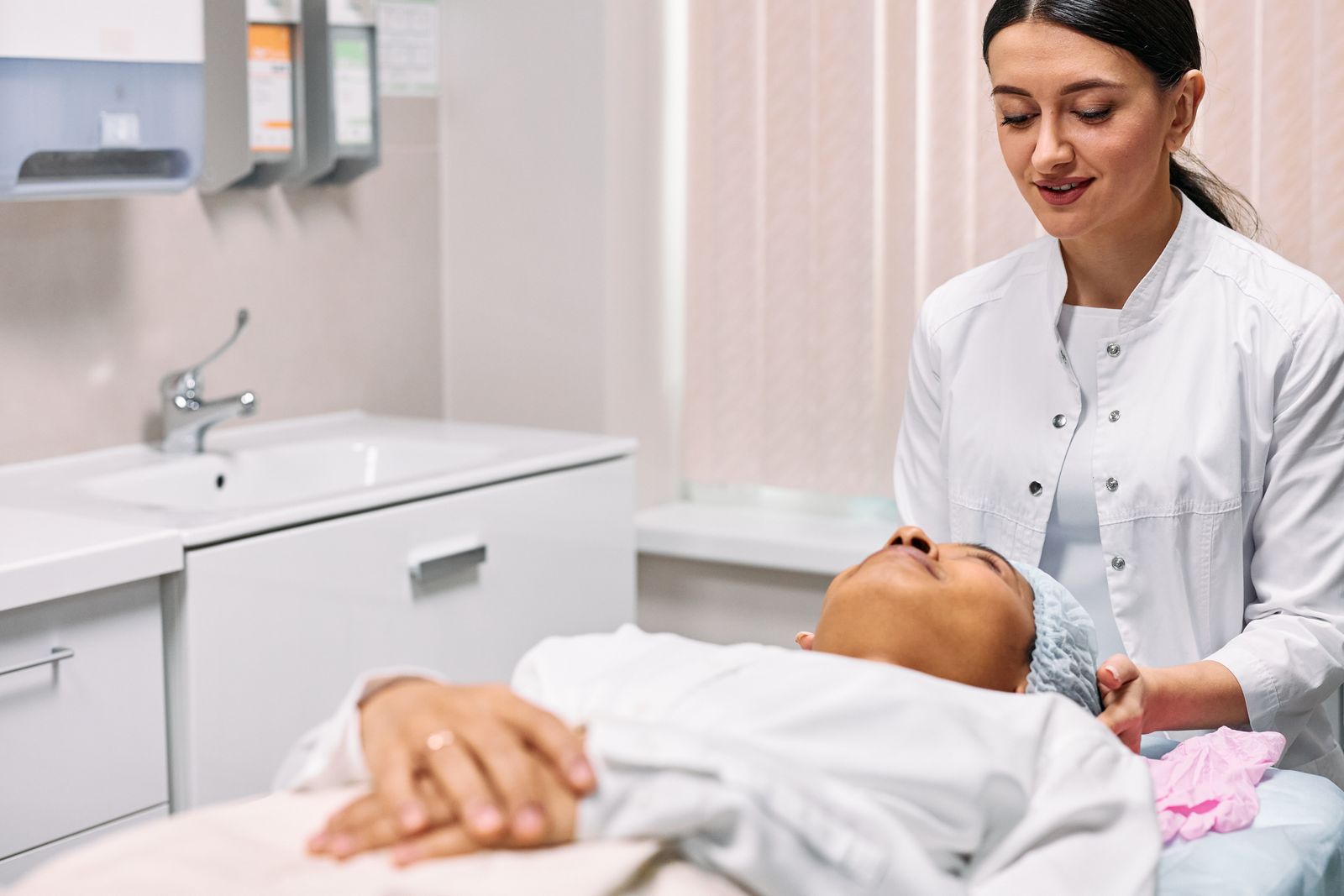
Clear photos plus a short written message can usually settle the following:
- A rough direction. For example, “this looks like a volume question rather than a skin-quality question”, or “the lines around your eyes look like movement lines, so a neurotoxin is the usual first conversation”. Read it as a direction, not a prescription.
- A menu shortlist. You’ll get two or three treatment names to research before you arrive, so you don’t walk in cold.
- How each item is priced. Seoul menus price treatments in different units: per shot count for focused-ultrasound and RF lifting, per kJ for some body and face devices, per cc for skin boosters, per area for filler, per session for lasers and peels. Knowing the unit ahead of time stops you comparing two prices that don’t measure the same thing.
- Where each item goes in your trip. This is often the most useful answer. Filler usually goes early in a trip so swelling has time to settle before you fly. Injectable skin boosters that leave small bumps for a day or two often go late, because the bumps fade on the plane rather than in your holiday photos. There’s more on this in why filler belongs on the first day of a Seoul trip.
- Obvious flags. If your photos and history show filler from another clinic, a recent procedure, or a concern that sounds more like a medical skin condition than a cosmetic one, the clinic can say so early. You might need extra time or a different plan, or the clinic might not be the right fit for what you want.
- A price range. You’ll usually get a floor or a band, never a final figure. That’s normal.
What can only be decided face to face?

A photo is a flat picture taken in whatever light you had. In person, a doctor can assess things a camera can’t show:
- Skin thickness and laxity. Pinching and lifting the skin shows how much it will respond to a lifting device and how many shots or how much energy makes sense.
- Existing filler. Old product can feel like a lump, sit in an unexpected layer, or have migrated. A doctor can feel this. In a photo it may just look like normal volume.
- Muscle strength. Neurotoxin doses depend on how strongly the forehead, frown or jaw muscles contract. Seeing you move live, from several angles, gives a much better read than a still image.
- Asymmetry and proportion. Phone lenses, especially front cameras held close, distort the nose, chin and lower face. A plan built only on a selfie can be off.
- Your full medical history. Medications, allergies, pregnancy, past reactions and recent procedures all have to be checked before treatment. If you’re unsure what to bring, see what to bring to a skin clinic consultation in Seoul.
- Consent. Risks, downtime and alternatives are discussed and agreed in person, and you’re allowed to change your mind once you’ve heard them.
So the final dose, the exact shot count, the final price and the yes-or-no on candidacy are all decided in the room. A reputable clinic will say so in its reply. If a clinic promises a specific result or an exact dose from photos alone, be cautious.
How to take photos a clinic can actually use
You don’t need special equipment. The aim is consistency and honesty:
- Use daylight. Face a window during the day. Avoid overhead bulbs, which cast shadows under the eyes and exaggerate hollows, and avoid direct sun, which flattens texture.
- Turn off filters and beauty mode. Many phones smooth skin by default, so check the camera settings.
- No makeup, hair pulled back. Include the hairline, the ears and the jawline.
- Use the rear camera if someone can help. Hold it at arm’s length or further, at face height. Front cameras held close enlarge the nose and shrink the ears.
- Take the standard set: straight on, both 45° angles and both side profiles, all with a relaxed, neutral face.
- Add movement shots for injectables: raise your eyebrows, frown, smile widely and squint. For jaw questions, clench your teeth. These show what a still face hides.
- Take close-ups of the concern itself. For pigmentation, include one close-up plus one wider shot so the clinic can see the scale. For under-eyes, look straight ahead and then slightly upward. For lips, take one relaxed and one with a slight smile.
- Don’t zoom digitally. Move closer instead.
Send the photos as they come off the camera rather than cropped or edited. If the messaging app compresses images heavily, ask whether the clinic would prefer files sent another way.
What to write alongside the photos
Photos without context lead to guesses. A short message helps a lot:
- Your trip dates, including the exact arrival and departure times. A plan for someone flying out at 9 a.m. on day four is different from one for a full week.
- One sentence on what bothers you, in your own words. “My cheeks look flatter than they used to” is more useful than a treatment name you read online.
- Past treatments, with approximate dates and product names if you know them, especially filler, threads and any lifting device in the last year.
- Medications, supplements and allergies. Don’t stop anything yourself to prepare for a treatment. Mention it and let the clinic advise.
- What happens after the trip. If you have a wedding, a work presentation or photos booked a week later, say so, because it changes what’s sensible.
- A budget band if you have one. It helps the clinic suggest options you’d actually choose.
How to read the reply
A good reply will usually include:
- Hedged wording, such as “likely”, “usually” or “to be confirmed at consultation”. That’s honest, not evasive.
- Ranges or floor prices rather than one total.
- The price unit for each item, and whether VAT is included. Many Seoul menus list prices before VAT.
- A suggested order across your days in Seoul.
If you’re asked for a deposit at this stage, ask clearly what happens if the doctor recommends a different plan when you meet. Also ask whether a visit that ends in “this isn’t right for you” carries a fee. Our guide to consultation-only visits covers what to expect if you’d rather keep the treatment decision fully open until you’re in the room.
Timing, time zones and privacy
Start one to three weeks before you fly. That leaves time for a few back-and-forth messages and, if needed, for adjusting your itinerary. Seoul is UTC+9, so a message sent in your evening in the Americas will arrive in the clinic’s morning, and you may not get a reply until the next business day.
Treat face photos as medical information. Send only what’s needed, and don’t send ID documents in the same chat. You can ask how long the clinic keeps the images and whether they’re stored with your patient record. Delete them from your own chat history afterward if you’d rather not keep them there.
Know where pre-trip messaging ends. It’s a planning conversation. If you notice something worrying about your skin, such as a changing mole, a rash that won’t settle or a reaction to an earlier treatment, see a doctor where you live first. Don’t wait for a trip.
Trying this with MIO Clinic
Seoul Skin Notes is run by MIO Clinic.
If you’d like to send photos ahead of a trip, MIO takes these messages on WhatsApp (the link is in the booking block below), and the consultation is in English. A reply to your photos is a planning reply. It isn’t a free or binding diagnosis, and the plan is confirmed in person. MIO’s in-clinic consultation uses detailed clinical photography and AI-assisted facial analysis to inform the doctor’s plan. The doctor decides, and the analysis doesn’t diagnose. The clinic’s skin analysis scan carries no additional charge.
MIO’s doctors are experienced, and each has a main area. Jung Guhyun and Shin Seungyong both see patients in English. Lifting, botox and filler are among their focus areas. Kim Doyoung and Lee Seungwook focus on areas such as pigmentation, acne, scars and lasers. Which doctor sees you is arranged at booking, so if your photos are about one particular concern, ask who handles it.
Some menu facts that pre-trip photos tend to raise, as published at the time of writing. Prices exclude VAT, choosing a specific doctor adds KRW 100,000 (about $70), and dollar figures are approximate at roughly 1,400 won per dollar:
- Filler is priced per area, in two tiers. Lip Filler, for example, is listed at KRW 99,000 (about $70) for the Domestic line and KRW 349,000 (about $250) for the imported line (Juvéderm, Restylane, Belotero). MIO marks filler as a first-day treatment in a trip. How much product your lips need is decided in person, not from a photo.
- Filler placed somewhere else. If your photos show filler from a previous clinic, MIO lists Hyaluronidase (other) at KRW 100,000 (about $70), compared with KRW 50,000 (about $35) for its own filler. This is worth knowing before the trip, because dissolving changes the plan and the order of the days.
- Injectable skin boosters go late. Rejuran Healer 2cc is listed at KRW 189,000 (about $135), uses numbing, and is marked as a last-day treatment.
FAQ
Can a clinic diagnose me from photos? No. Photos let a clinic suggest a direction, a menu shortlist and a trip schedule. The diagnosis, the dose and your candidacy are decided at an in-person consultation, after a physical assessment and a review of your medical history.
Will the price I’m quoted over messaging be the final price? Usually not. Remote replies give floor prices or ranges, because the final amount depends on what the doctor finds in person, such as how many areas, how much product or how many shots. Check whether the quoted prices include VAT and what unit each one is in.
What photos should I send for botox or filler? Send front, both 45° angles and both profiles with a relaxed face, in daylight, with no filter and no makeup. For botox, add movement shots: raised brows, a frown, a squint and a clenched jaw. For filler, add a close-up of the area that concerns you.
How early should I message before my trip? One to three weeks ahead is comfortable. It allows a few exchanges and time to adjust your itinerary if the clinic suggests treatments that need to fall on specific days.
Should I mention filler I had at another clinic? Yes, with the approximate date and the product if you know it. Earlier filler can change what’s recommended, whether it needs dissolving first, and which day it’s done on.
Does MIO reply to photos on WhatsApp? Yes. MIO takes pre-trip messages on WhatsApp and consults in English. The reply is a planning reply, and the treatment plan is confirmed at the in-person consultation in Gangnam.
Book at MIO Clinic, Gangnam
Seoul Skin Notes is the official journal of MIO Clinic, a skin & aesthetic clinic in Gangnam, Seoul. The MIO team handles consultations and bookings in English over WhatsApp — tell them what you are considering and they will walk you through your options.
MIO Clinic
2-3F, FINE TOWER, 372 Gangnam-daero, Gangnam-gu, Seoul
Gangnam Station, Exit 4 — 3-minute walk
Hours: Mon & Fri 10:00–21:00 · Tue–Thu & Sat 10:00–19:00 · Sun 10:00–19:00
Web:mioclinic.kr/en · Instagram:@mioclinic_global · Email:en-official@mioclinic.kr · Google Maps