
Yes — on most Seoul lifting menus, a combination line costs less than the two single-device lines added together, but usually by less than people assume. The realistic gap is tens of thousands of won on small device pairs and roughly ₩90,000–₩190,000 (about $65–$140) on the big ultrasound-plus-radiofrequency packages. That is a real discount, not a rounding error, but it is nowhere near “two for the price of one.” The bigger consequences of bundling are not financial: one numbing session instead of two, one longer appointment instead of two shorter ones, and one recovery window instead of two.
This article walks through what a combination line actually contains, does the arithmetic with published numbers, explains why clinics package devices this way, and — the part most pages skip — describes when a single device is the better call.
All prices below are quoted from MIO Clinic’s published menu as of the time of writing, and they exclude VAT (Korea’s VAT is 10%, so the number on the receipt is higher than the number on the menu). Menu prices change. Dollar figures convert at roughly ₩1,380 to the dollar and move with the exchange rate — treat every USD amount here as approximate.
What does a “combination” line on a Seoul lifting menu actually mean?
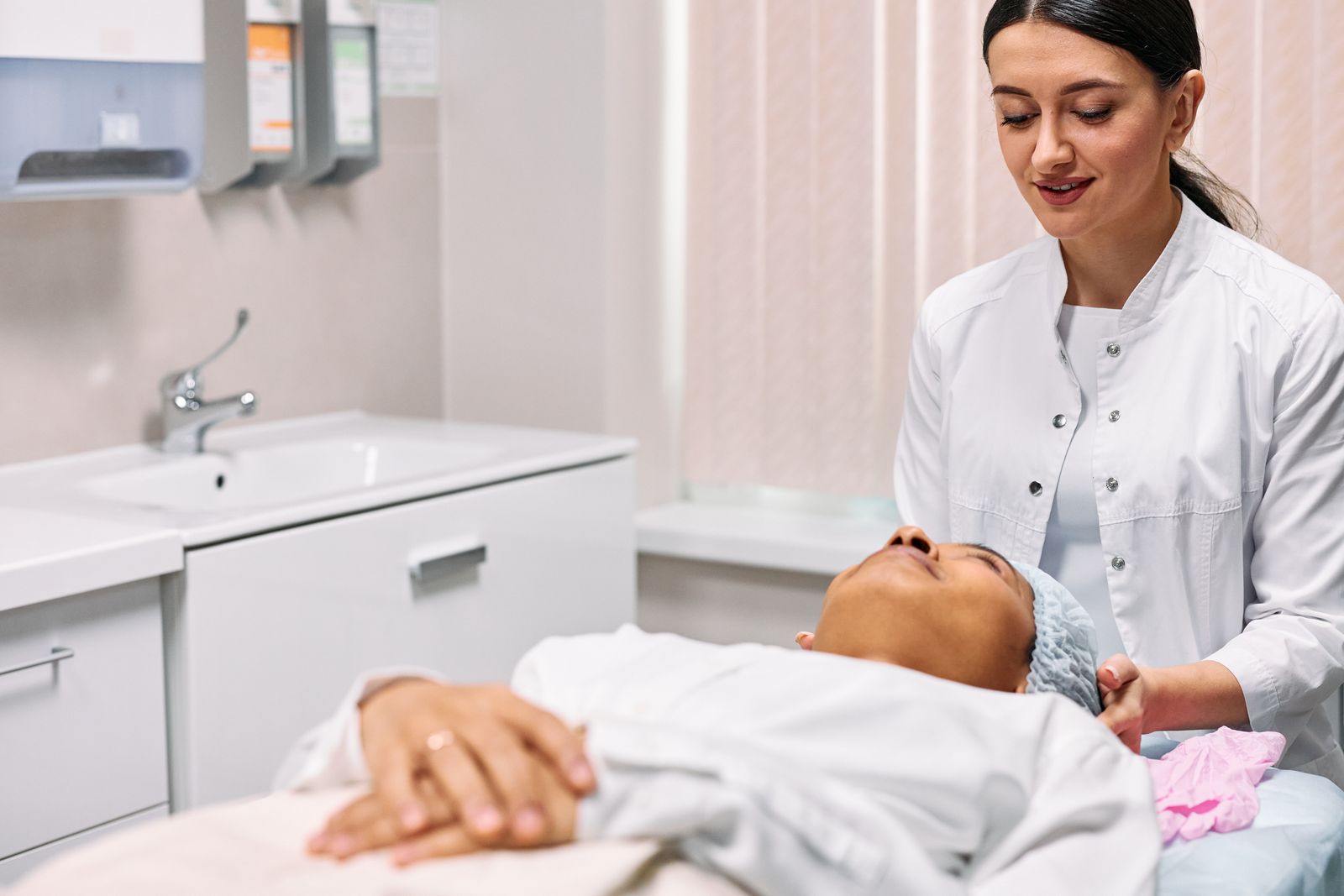
It means two different energy devices are delivered in one appointment, usually because they work at different depths and on different tissue.
Micro-focused ultrasound devices (Ultherapy and similar) deposit heat in small, precisely targeted points deep in the tissue, including the fibrous layer beneath the fat. Monopolar radiofrequency devices (Thermage and similar) heat a broader, shallower volume of the dermis and subcutaneous layer more diffusely. Because the depth profiles differ, they are not redundant, and clinics commonly present them as a pair: one aimed at deeper structural support, one aimed at skin thickness and surface quality.
That is the genuine clinical logic behind bundling. It is not a claim that the pair produces a better outcome for you specifically — whether you benefit from two devices depends on your skin thickness, laxity pattern, age, and what is actually bothering you. That’s an assessment question, not a menu question.
A combination line is also not a new treatment. It is two existing treatments sold together, which is why you can and should check the individual line items behind it.
How much does bundling actually save? The arithmetic

Here are two real pairings from a Gangnam menu, with the separate lines and the package line side by side.
300-shot tier
| Line item | Price (excl. VAT) | Approx. USD |
|---|---|---|
| Ultherapy Prime 300 shots | ₩1,090,000 (regular ₩1,290,000) | ~$790 |
| Thermage 300 shots | ₩1,190,000 (regular ₩1,290,000) | ~$860 |
| Booked separately, total | ₩2,280,000 | ~$1,650 |
| Ultherapy Prime 300 shots + Thermage 300 shots | ₩2,190,000 (regular ₩2,480,000) | ~$1,590 |
| Difference | ₩90,000 | ~$65 |
600-shot tier
| Line item | Price (excl. VAT) | Approx. USD |
|---|---|---|
| Ultherapy Prime 600 shots | ₩1,890,000 | ~$1,370 |
| Thermage 600 shots | ₩1,990,000 | ~$1,440 |
| Booked separately, total | ₩3,880,000 | ~$2,810 |
| Ultherapy Prime 600shots + Thermage 600shots | ₩3,690,000 (regular ₩3,880,000) | ~$2,675 |
| Difference | ₩190,000 | ~$140 |
Two things are worth noticing.
First, the saving is about 4–5% of the total. On a bill of this size that is meaningful, but it is not the reason to do two devices. If the only argument for the second device is the package discount, you are spending roughly ₩1,100,000–₩1,900,000 ($800–$1,380) to save ₩90,000–₩190,000 ($65–$140). That math only works if you actually wanted both.
Second, the discount is not proportional across the menu. On the lighter pairing — Shurink 300 shots at ₩59,000 (~$43) plus Oligio 300 shots at ₩349,000 (~$250), which come to ₩408,000 (~$295) separately — the package “Shurink 300 shots + Oligio 300 shots” is listed at ₩399,000 (~$290). That is a ₩9,000 (about $6.50) difference. The bundle exists there for convenience and sequencing, not for savings, and an honest clinic will tell you so if you ask.
So: check the arithmetic yourself before assuming the package is the deal. It takes thirty seconds and the individual lines are usually right there on the same menu.
Why do clinics bundle two devices into one session at all?
There are unglamorous operational reasons, and they are worth understanding because they tell you where the discount comes from.
- One numbing cycle instead of two. Topical anesthetic needs time to work. If you come twice, that setup happens twice.
- One room booking, one prep, one post-treatment care cycle. Chair time is the scarce resource in a busy clinic, and a combined session uses it more efficiently than two separate visits.
- One recovery window for you. If both devices leave you flushed, you would rather be flushed once.
- Travel patients have finite days. Someone in Seoul for five days cannot easily return three weeks later, so combining is often the only way both treatments happen at all.
None of that is sinister, but notice what it implies: the clinic saves real cost on a combined session, and the package price reflects that saving being partly passed on. It does not imply the pair is clinically better for you than one device done well.
What does combining actually do to your appointment?
It usually locks in numbing. On a menu that marks pain level per line, single-device radiofrequency is often marked as a sting you can sit through without anesthetic, while micro-focused ultrasound is marked as requiring numbing. When the two are combined into one line, the combined entry is marked as requiring numbing — which means topical anesthetic, wait time, and a longer total appointment. If you were mentally budgeting the shorter radiofrequency experience, the combined booking is not that. We covered which lifting treatments need numbing and how much time each adds in a separate article on numbing and appointment length.
It makes your visit substantially longer. Two devices means two full passes over the treatment area on top of shared prep. Plan the day around it rather than stacking a dinner reservation right after.
It concentrates the recovery into one window. Expect the common, temporary effects of energy-based lifting: redness, warmth, mild swelling, tenderness to touch or when chewing, and occasionally small areas of tingling. Most of this settles within hours to a few days, but it varies from person to person, and two devices can make the immediate flush more noticeable than one. Less common but real risks with energy devices include prolonged numbness or altered sensation, blistering or a superficial burn, and — uncommonly — small areas of fat loss or contour irregularity where energy was delivered. These are general risks of the device categories, not predictions about any specific clinic or patient, and they are the reason an assessment and an honest conversation about your face come before the machine.
It changes where the treatment belongs in your trip. Lifting devices are generally schedulable at any point in a trip rather than being strictly first-day or last-day treatments, but a longer, more intensive combined session on the same day you fly is a rough plan regardless. If you are sequencing several treatments across a short trip, we mapped out which ones fit early versus late in the trip-sequencing article.
When is one device genuinely enough?
Plenty of the time. A few honest cases:
- Your concern is clearly one thing. If what bothers you is crepey, thin-feeling skin texture rather than sagging contour, the broad dermal-heating device may address it on its own. If what bothers you is a softening jawline with skin that is otherwise thick and firm, the deeper, more targeted device may be the relevant one. Buying both to cover an unclear brief is expensive uncertainty.
- This is your first energy treatment. There is a reasonable argument for doing one device, seeing how your skin responds over the two-to-three months collagen remodeling typically takes, and deciding from there. You lose the small bundle discount. You gain information about your own response, which is worth more.
- Your budget forces a choice between one done properly and two done thinly. A single device at an adequate shot count is generally a more sensible purchase than two devices at counts too low to do much. Shot counts are the variable that quietly determines what you actually receive, and we broke down how to compare them across quotes in what a “shot” actually means on a lifting menu.
- You have significant volume loss rather than skin laxity. Energy lifting does not replace volume, and no combination of two devices turns into a facelift. If the underlying issue is deflation or substantial descent, a package of two tightening devices may produce a change you find underwhelming relative to what you paid. A candid consultation should say this out loud.
- You have an active skin infection, inflamed acne, or an open lesion in the treatment area, or you are pregnant or breastfeeding — these are situations where treatments commonly get postponed rather than stacked. Timing questions like this deserve a conversation, not a booking button.
The reverse is also worth stating: nobody should promise you a specific millimeter of lift, a specific number of years off, or the same result someone else got. Response to energy lifting varies with skin thickness, age, baseline collagen, and how your tissue heals. Some people see a change they are happy with. Some see a subtle one. A clinic that guarantees an outcome in advance is telling you something about the clinic.
What to confirm before you accept a package quote
Ask these before you agree, ideally over your booking channel so you have it in writing.
1. Which exact line is this? Combination entries sometimes appear in more than one place on a menu — for example, a 300-shot ultrasound-plus-radiofrequency pairing appears both as “Ultherapy Prime 300 shots + Thermage 300 shots” at ₩2,190,000 (~$1,590) and as an entry worded “Ulthera 300 shots + Thermage 300 shots” at ₩1,990,000 (~$1,440). The wording differs slightly and so does the price. Confirm which specific line you are being quoted rather than assuming any “300+300” package is the same product.
2. Which tier of each device is inside the bundle? Some packages don’t spell this out. A menu may list “InMode Fx + Forma” at ₩199,000 (~$144) while separately listing “InMode Fx 1 Area (4 min)” at ₩59,000 (~$43), “InMode Fx Full (10 min)” at ₩119,000 (~$86), and “InMode Forma (6 min)” at ₩109,000 (~$79). Whether the bundled Fx is the one-area or the full-face version materially changes what you’re buying. Ask.
3. Is VAT included? On menus quoted excluding VAT, a ₩3,690,000 package is not what you pay. Add 10%. We covered the full list of things that quietly move a Seoul bill in how to read a Seoul clinic price list.
4. Is there a surcharge for choosing a specific doctor? At MIO Clinic, requesting a specific doctor adds ₩100,000 (about $72) on top of the treatment price, as published at the time of writing. Surcharges like this are common and easy to miss when you’re comparing package totals across clinics.
5. Does the package have to be done in one visit? Sometimes it can be split across two appointments; sometimes the price is built around a single session. If you are in Seoul for three days, the answer changes your itinerary.
6. What’s the plan if one device turns out to be a poor fit at assessment? A reasonable answer is that the package is adjusted or unbundled. If the answer is that the package is the package regardless of what the assessment finds, that tells you the order of operations at that clinic.
The short version
Combination lifting packages in Seoul are real discounts, but modest ones — roughly 4–5% on the large ultrasound-plus-radiofrequency pairings, and sometimes almost nothing on lighter device pairs. The stronger arguments for combining are practical: one numbing cycle, one appointment, one recovery window, and one slot in a short trip. The strongest argument against is simply that you may not need the second device.
Work out the arithmetic from the individual line items, confirm which exact package line you’re being quoted and what tier sits inside it, add VAT and any doctor surcharge, and let the assessment — not the discount — decide how many devices you walk out having had.
FAQ
Is a two-device package always cheaper than booking each treatment separately?
Not always, and rarely by as much as people expect. On large pairings the gap is real but modest — for example ₩2,190,000 (~$1,590) for a combined 300-shot ultrasound-plus-radiofrequency line versus ₩2,280,000 (~$1,650) for the two lines added up, a difference of ₩90,000 (~$65). On lighter pairings the difference can be under ₩10,000 (~$7). Always add the individual line items yourself before assuming.
Do both devices have to be done on the same day?
Usually yes, because the package price is built around a single session with one prep and one numbing cycle. Some clinics will split it; some won’t. Ask before you book, especially if you’re in Seoul for only a few days.
Does combining two lifting devices hurt more than doing one?
It generally means a longer session under topical anesthetic rather than sharper pain. Where a single radiofrequency treatment may be marked as a manageable sting, a combined entry with ultrasound is typically marked as requiring numbing — so expect anesthetic wait time and a longer appointment overall. Sensation varies a lot between people.
Why does the same combination appear twice on a menu at two different prices?
Because the entries aren’t identical even when they look similar — the device naming differs slightly and so does the listed price, for instance ₩2,190,000 (~$1,590) versus ₩1,990,000 (~$1,440) for 300-shot pairings. Don’t assume two similarly named packages are the same product. Ask which specific line your quote refers to.
Is one lifting device ever enough?
Often, yes — particularly for a first energy treatment, when your concern is clearly one thing, or when the budget would otherwise stretch both devices too thin to do much. Doing one device at an adequate shot count and watching how your skin responds over the following two to three months is a legitimate plan, not a compromise.
Does the package price include VAT and any doctor surcharge?
On menus quoted excluding VAT, no. Add Korea’s 10% VAT, and check whether requesting a specific doctor adds a fee — at MIO Clinic that surcharge is ₩100,000 (about $72) as published at the time of writing. Both are easy to overlook when comparing package totals between clinics.
Book at MIO Clinic, Gangnam
Seoul Skin Notes is the official journal of MIO Clinic, a skin & aesthetic clinic in Gangnam, Seoul. The MIO team handles consultations and bookings in English over WhatsApp — tell them what you are considering and they will walk you through your options.
MIO Clinic
2-3F, FINE TOWER, 372 Gangnam-daero, Gangnam-gu, Seoul
Gangnam Station, Exit 4 — 3-minute walk
Hours: Mon & Fri 10:00–21:00 · Tue–Thu & Sat 10:00–19:00 · Sun closed
Web:mioclinic.kr/en · Instagram:@mioclinic_global · Email:en-official@mioclinic.kr · Google Maps