If you have reactive or sensitive skin, the safest plan at a Seoul skin clinic is usually the opposite of what tourists expect: fewer lasers on the first visit, lower energy settings, a patch test before any full-face treatment, and a few weeks spent repairing your barrier before anything aggressive. A careful clinic won’t run the same protocol on skin that flushes, stings, or breaks out easily as it would on resilient skin — it should test small, start gentle, and build up only if your skin tolerates it. If a clinic wants to do everything at full strength on day one, that’s a red flag, not efficiency.
This matters more for medical tourists than for locals. You’re on a compressed timeline, your skin is already stressed from a long flight, dry cabin air, a new climate, and a different water and product routine — and a reaction that would be a minor annoyance at home becomes a trip-ruining problem when you have three days left in Seoul. Here’s how a restraint-first clinic actually adjusts, and what you should ask for.
What “reactive” or “sensitive” skin means to a clinic
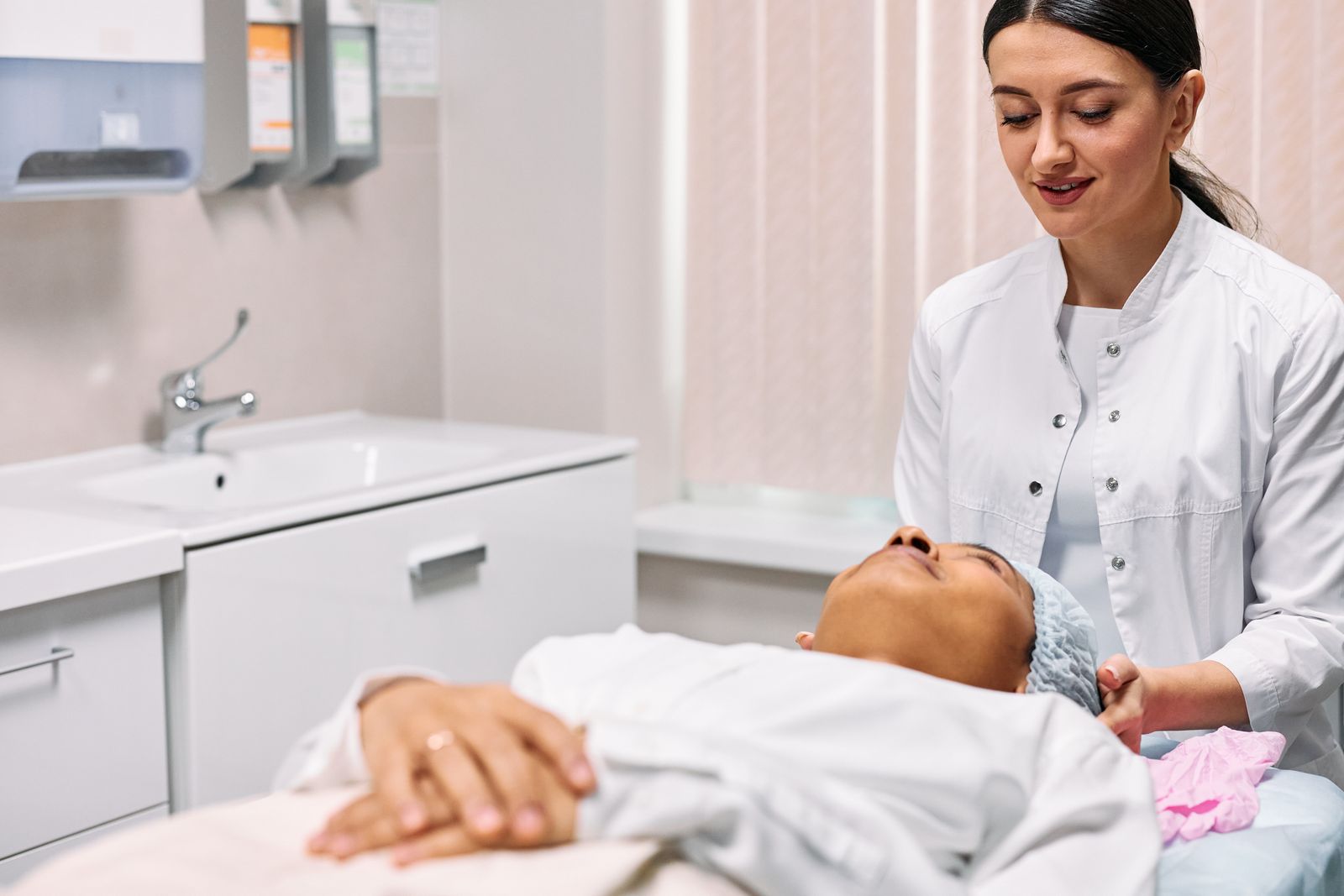
To a clinic, “sensitive skin” isn’t one thing — it’s a few different problems that need different adjustments. It helps to know which one is yours before you walk in.
- Reactive/flushing skin turns red fast from heat, product, or emotion and calms slowly. Heat-based treatments (many lasers, radiofrequency) can trigger flushing, so settings and cooling matter.
- Barrier-impaired skin stings when you apply active ingredients, feels tight, and gets flaky patches. The barrier needs rebuilding before resurfacing, not after.
- Rosacea-prone skin has persistent redness and visible vessels and is easily provoked — it’s a distinct condition with its own protocol (covered in our guide on rosacea and facial redness in Seoul).
- Allergy/contact-reactive skin reacts to specific ingredients or numbing creams — which is exactly why patch testing exists.
You can be more than one of these at once. A good consult sorts out which, because the adjustments differ.
Why the first visit should be a test, not a full treatment

The single most important adjustment for reactive skin is sequencing: assessment and a small test first, the real treatment later. A clinic that’s assessment-first — MIO’s general positioning, and the sensible approach anywhere — should look at your skin, ask what has flared it before, and often do a limited test spot rather than a full-face pass on day one.
A test spot means treating a small, discreet patch (near the jawline, behind the ear, a small zone on the cheek) at the intended settings, then waiting to see how your skin responds over 24–72 hours. It costs you a little time but tells the clinic whether the plan is safe before it’s committed to your whole face. If you flush hard, blister, or stay red far longer than expected, they dial the plan down — and you’ve lost a coin-sized patch instead of your entire face and half your trip.
This is why building in a buffer day matters. If you can, schedule the consult and any test early in your stay, and leave the bigger session for a few days later. That gap is your safety margin.
Patch testing and numbing cream: the parts people skip
Two specific tests are worth insisting on if you’re reactive.
The treatment patch test, described above, checks how your skin handles the actual device or peel. Ask for it explicitly for anything ablative, any peel, or any first-time laser.
A numbing-cream check matters more than people realize. Topical anesthetics (lidocaine, prilocaine, tetracaine blends) are used before many treatments, and they’re a genuine cause of contact reactions — stinging, redness, rarely a true allergic response. If you’ve reacted to numbing cream at the dentist or during a past cosmetic treatment, say so up front. A clinic can test a small area of numbing cream first, shorten the contact time, or choose a treatment that doesn’t need it.
Tell the clinic your full reaction history: past flares, product allergies, whether you’re on any acne medication, isotretinoin in the last several months (this alone changes what’s safe), and how your skin behaved after any previous laser or peel. None of this is oversharing — it’s the information the plan is built on.
Gentler settings: how the same treatment gets dialed down
Most clinic treatments have a range, not a single fixed intensity. Adjusting for sensitive skin usually means moving down that range and spacing sessions further apart — trading a little speed for a lot of safety.
- Lasers and energy devices: lower fluence (energy), fewer passes, longer cooling, and sometimes a longer-wavelength or gentler device instead of the most aggressive option. Aggressive fractional resurfacing, in particular, is often not the first move for reactive skin — the downtime and reaction risk are real, as we cover in fractional resurfacing in Seoul and the downtime nobody warns you about.
- Chemical peels: a lower concentration, a shorter contact time, or a gentler acid, built up gradually across visits rather than one deep peel.
- Injectables and microneedling: more conservative depth and technique, with extra attention to soothing and cooling afterward.
- Spacing: longer intervals between sessions so your skin fully settles before the next one, instead of stacking treatments close together.
The trade-off is honest: gentler settings usually mean you need more sessions to reach the same result, and results build more gradually. For reactive skin that’s the right trade — a slower, uneventful course beats a fast one that flares.
Barrier-first: repair before you resurface
The adjustment that helps reactive skin most isn’t a device setting — it’s spending time rebuilding the barrier before any resurfacing. If your barrier is already compromised (stinging, tightness, flaking), treating on top of it invites a bigger reaction and a slower recovery.
A barrier-first approach usually means simplifying your routine for a couple of weeks first: pausing retinoids, acids, and scrubs; using a bland, fragrance-free cleanser and a plain moisturizer with ceramides; and being strict about sunscreen. In-clinic, that can include gentle hydrating or soothing treatments rather than resurfacing ones. Only once the barrier is calm and intact does the clinic move to the treatment you came for. If you’re on a short trip, ask what you can start before you fly — simplifying your routine a week ahead can get your skin to a calmer baseline by the time you land.
This is also the honest version of the “glass skin” goal. A lot of that result is calm, well-hydrated, intact skin — not aggressive resurfacing — which is why the in-clinic reality behind Seoul’s glass skin leans gentler than the hype suggests.
Aftercare when your skin overreacts to everything
Reactive skin needs a stricter, plainer aftercare window than resilient skin, and you should plan your days around it.
- Expect redness, warmth, and mild stinging to last longer than the “typical” timeline a clinic quotes for average skin. Ask specifically what your expected recovery looks like given your history.
- Keep it minimal: gentle cleanser, plain ceramide moisturizer, strict sunscreen once your skin can tolerate it. No actives, no exfoliation, no new products during recovery.
- Cool (not iced) compresses and avoiding heat — hot showers, saunas, jjimjilbang, intense sun, alcohol — reduce flushing while you heal.
- Know the difference between a normal reaction and a warning sign. Prolonged swelling, spreading redness, blistering, oozing, or pain beyond what was described are reasons to contact the clinic, not to wait it out. Confirm before you leave how to reach them and how follow-up and revisions work — worth reading our guide on what happens if something goes wrong at a Seoul skin clinic.
When a treatment isn’t a good fit — and what it costs
Sometimes the right answer for reactive skin is not now, or not this. If your barrier is actively inflamed, if you’ve recently been on isotretinoin, if you’re mid-flare with rosacea, or if you reacted badly to a similar treatment before, a responsible clinic will postpone or pick something gentler rather than push ahead. Being told “let’s wait” is a sign of good judgment, not a wasted trip.
On cost, treat every figure as an approximate starting floor that depends entirely on your skin and plan — no one can quote your real total in advance, and a clinic that gives you a firm all-in price before seeing your skin is guessing. As a rough Seoul reference: a consultation is often modest or waived if you proceed (typically around ₩0–50,000 / roughly $0–35, sometimes credited toward treatment); gentle in-clinic soothing or hydrating sessions commonly start around ₩100,000–300,000 (about $70–210); entry-level gentle laser sessions often start near ₩150,000–400,000 (about $110–290) and up depending on the device and area. A patch or test spot is frequently free or minimal. For sensitive skin, budget for more sessions at gentler settings, not one big one — and ask the clinic to walk you through the likely number of visits before you commit.
The through-line for reactive skin is simple: test small, start low, repair first, and go slow. A clinic that leads with that is protecting your skin and your trip. One that skips straight to full-strength on the first visit isn’t saving you time — it’s transferring the risk to you.
FAQ
How is treatment for sensitive skin actually different at a Seoul skin clinic? Mainly in sequencing and intensity: a patch or test spot before full treatment, lower energy settings and fewer passes, longer gaps between sessions, and a barrier-repair phase before any resurfacing. The treatments can be the same — the settings and pacing are dialed down.
Should I ask for a patch test, or will they offer one? Ask for it explicitly, especially for any laser, peel, or ablative treatment, and mention any past reaction to numbing cream so that can be tested too. A careful clinic will often suggest it for reactive skin, but requesting it removes any doubt.
Can I get real results on a short trip if my skin is sensitive? Yes, but plan for gentler, gradual progress rather than one dramatic session. Schedule your consult and any test early in the trip, leave a buffer day, and start simplifying your routine before you fly so your skin arrives calmer. Some plans are best completed over more than one visit.
How long will redness last on reactive skin? Usually longer than the “average skin” timeline a clinic quotes — ask what your specific recovery looks like given your history. Mild redness, warmth, and stinging are normal; prolonged swelling, spreading redness, blistering, or pain are reasons to contact the clinic.
What should I do before my appointment to lower the risk of a reaction? Pause retinoids, acids, and scrubs for about a week or two beforehand, keep to a bland fragrance-free cleanser and a ceramide moisturizer, be strict with sunscreen, and avoid a new product or a fresh flare right before treatment. Bring a full history of past reactions and any medications.
Is it a bad sign if the clinic tells me to wait? No — it’s usually good judgment. If your barrier is inflamed, you’re mid-flare, or you recently took isotretinoin, postponing or choosing a gentler option protects your skin. A clinic willing to delay is prioritizing safety over booking you in.
Book at MIO Clinic, Gangnam
Seoul Skin Notes is the official journal of MIO Clinic, a skin & aesthetic clinic in Gangnam, Seoul. The MIO team handles consultations and bookings in English over WhatsApp — tell them what you are considering and they will walk you through your options.
MIO Clinic
2-3F, FINE TOWER, 372 Gangnam-daero, Gangnam-gu, Seoul
Gangnam Station, Exit 4 — 3-minute walk
Hours: Mon & Fri 10:00–21:00 · Tue–Thu & Sat 10:00–19:00 · Sun closed
Web:mioclinic.kr/en · Instagram:@mioclinic_global · Email:en-official@mioclinic.kr · Google Maps