The single most useful thing to know before you book a skin treatment in Seoul is that when you come changes what you should get — and sometimes what you’ll pay. Pigment lasers heal best in low-UV months, so winter is the smart window for anything that resurfaces or lifts pigment. Summer humidity and strong sun make those same treatments riskier and slower to recover. Injectables and lifting devices are far less season-dependent. And Korea’s travel calendar — cherry-blossom spring, holiday clusters, year-end — quietly moves clinic availability and your total trip cost. This guide walks the year month by month so you can match your treatment to the season instead of fighting it.
Two rules do most of the work. First: the more a treatment disrupts your skin barrier or targets pigment, the more it wants a low-sun, low-humidity window — roughly late October through March in Seoul. Second: treatments that don’t break the surface (most botulinum toxin, most fillers, most energy-based lifting like HIFU and RF) can be done nearly any month, so save those for your convenient travel dates and reserve the scarce winter slots for laser and resurfacing.
Why season changes laser results (and not just comfort)

It’s not about the weather being pleasant. After any treatment that removes pigment or resurfaces the skin — pigment/toning lasers, fractional resurfacing, deeper peels — the treated skin is temporarily more reactive to UV. Sun exposure in that healing window is the main driver of post-inflammatory hyperpigmentation (PIH): the treated spot darkens instead of clearing, which is the opposite of what you came for. This risk is higher in anyone with more melanin, and it’s a year-round caution — but summer sun plus humidity plus sweat makes it materially worse and recovery slower.
That’s why a conservative, assessment-first clinic will often steer pigment and resurfacing work toward the cooler months and toward multi-session plans, rather than doing an aggressive single pass in July. If you can only travel in summer, it doesn’t mean no treatment — it means choosing gentler settings, more sessions, and militant sun protection, and being honest that results may come slower.
The low-UV window: late October through March

This is prime time for anything pigment- or texture-focused. Melasma programs like the weekly Spectra laser toning protocol, fractional resurfacing, sun-damage stacks, and multi-pass toning all heal more predictably when ambient UV is low and you’re bundled up outdoors anyway. Winter also happens to be when a resurfacing plan’s realistic downtime — redness, flaking, a few days of not-quite-camera-ready skin — is easiest to hide under scarves and indoor life.
If your whole reason for coming is pigment, sun damage, or texture, plan the trip for this window if you possibly can. It’s the difference between working with your skin’s healing and against it.
- November–December: excellent for laser toning, fractional resurfacing, and sun-damage repair after a summer of accumulated pigment. You’re treating exactly when UV is lowest.
- January–February: coldest, driest, lowest-UV — arguably the best resurfacing window of the year. Downside: indoor heating is brutally drying, so aftercare hydration matters more than you’d expect.
- March: still a strong laser month early on, but UV climbs and spring pollen can leave sensitive skin reactive — front-load resurfacing before late March.
Spring (March–May): great weather, worst crowds, watch the pollen
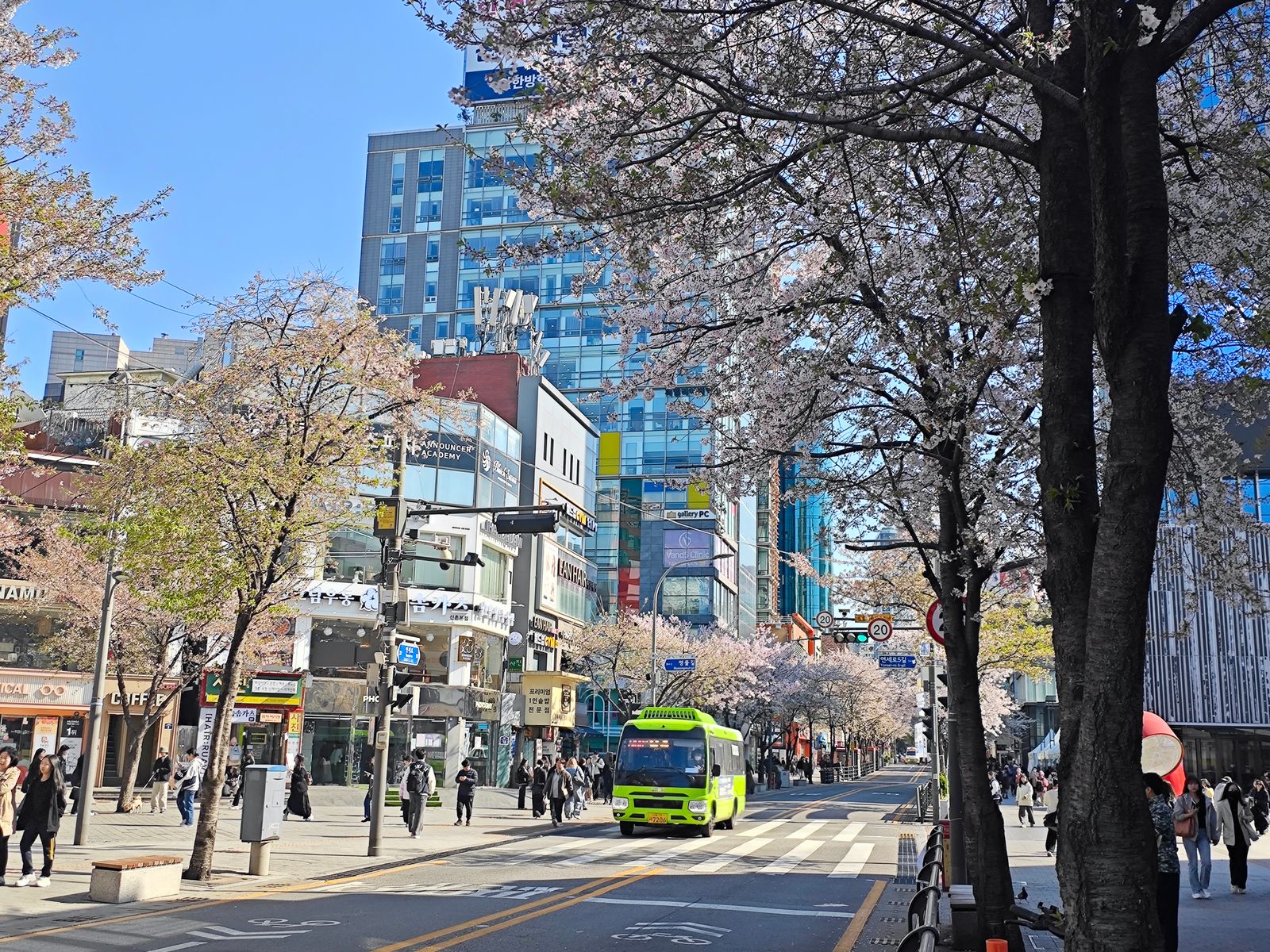
Cherry-blossom season is the most beautiful — and most crowded and most expensive — time to be in Seoul. Flights and hotels spike around late March to April, and popular clinics book out further ahead. Nothing about spring is bad for your skin per se, but two things matter: rising UV means you should finish aggressive pigment work early in the season, and spring’s fine dust and pollen can make reactive or rosacea-prone skin flare, so it’s a poor time for anything that already runs hot. If redness is your concern, read the Vbeam and Excel V rosacea protocols before you book — you may want a calmer skin baseline first.
Spring is a fine season for injectables and lifting (botox, filler, HIFU/RF), which don’t care about UV. If you’re coming for the blossoms anyway, get the non-surface work and defer heavy resurfacing to your next winter trip.
Summer (June–August): the season to be conservative
Seoul summers are hot, humid, and — during the monsoon-adjacent stretch of roughly late June into July — wet. UV is at its annual peak. This is the hardest season to do pigment and resurfacing work safely, because sweat, humidity, and sun all fight the healing you’re paying for. It’s not that clinics close; it’s that a good one will actively talk you out of an aggressive single-session laser plan in August.
What summer is good for:
- Injectables and toxin: botox for jawline or expression lines, most fillers — surface stays intact, UV is irrelevant.
- Energy-based lifting (HIFU, RF) that works below the surface without an open wound.
- Gentle, barrier-respecting facials and light programs — as long as you commit to real sun protection.
If you must treat pigment in summer, expect a slower, more cautious multi-session approach and non-negotiable daily SPF and sun avoidance during healing. Come in expecting restraint, not a dramatic single-visit fix — a same-day transformation on pigment is not physiologically realistic anyway.
Autumn (September–October): the underrated sweet spot
Early autumn is quietly one of the best times to come. The worst heat and humidity break, UV starts dropping, and — crucially — this is when many people want to undo a summer’s worth of accumulated sun damage. It’s an ideal on-ramp into the winter laser window: you can start a pigment or sun-damage program in September–October and continue it through the cool months. Crowds and prices are gentler than spring’s blossom peak, too. If you’re the kind of person who came home from summer with new spots, this is your season to build a sun-damage repair stack.
Where price actually moves with the season
Be clear-eyed about this: the treatment price at a given clinic is mostly stable across the year. What swings seasonally is your total trip cost — airfare and hotels around cherry-blossom spring, Chuseok (Korean thanksgiving, dates shift by lunar calendar, usually September–October), and the year-end holidays can be markedly higher, while deep winter and non-peak autumn are cheaper to travel. Some clinics do run periodic promotions, but you should never book timing around a promised discount, and any quoted treatment price is a starting floor: the real number depends on your skin, the number of sessions, and what an in-person assessment finds. Always ask for the individualized estimate rather than assuming the advertised entry price is your price.
For treatments quoted as a starting floor, a single pigment-laser toning session in Seoul commonly starts somewhere around ₩100,000–₩300,000 (roughly $70–$220), and a fractional resurfacing session often starts higher, in the low hundreds of thousands of won — but ranges vary widely by device, area, and clinic, and melasma or sun-damage work is almost always a series, not one visit. Treat any single number as approximate and confirm your own after an assessment.
A quick month-by-month planner
- January–February: Best resurfacing/pigment window. Come for laser toning, fractional, sun-damage repair. Bring aggressive moisturizer for the dry heated indoors.
- March: Finish pigment work early; UV rising, pollen starting. Blossom crowds and prices begin.
- April–May: Peak crowds/cost. Good for injectables and lifting; defer heavy laser.
- June–August: Peak UV/humidity. Injectables, toxin, HIFU/RF yes; pigment/resurfacing only cautiously and gently, with strict sun protection.
- September–October: Underrated sweet spot. Break in the heat, start pigment/sun-damage programs, gentler prices than spring. Mind Chuseok travel spikes.
- November–December: Prime laser season begins. Ideal to treat a summer’s pigment; downtime hides under winter layers. Year-end travel costs climb late December.
How to decide, in one sentence
Match the treatment to the season, not the other way around: book pigment and resurfacing for the cool, low-UV months (late autumn through late winter), do injectables and lifting whenever your travel is convenient, and be skeptical of any plan that ignores your healing window to sell you an aggressive summer laser. A restraint-first clinic that does an in-person, AI-assisted skin assessment before dosing will tell you the same thing — and if the honest answer is “come back in November for that one,” that’s a good sign, not a lost sale.
FAQ
What’s the best month for laser treatment in Seoul? Roughly January–February — coldest, driest, and lowest ambient UV, which is when pigment and resurfacing lasers heal most predictably with the lowest risk of post-treatment darkening. November–December and early March are also strong. The key isn’t the exact month but staying inside the low-UV window.
Can I get skin laser done in summer if that’s when I visit? Yes, but conservatively. A careful clinic will use gentler settings, plan more sessions instead of one aggressive pass, and require strict daily sun protection during healing, because Seoul’s peak-summer UV and humidity raise the risk of post-inflammatory hyperpigmentation. Expect slower results, not a single dramatic fix.
Which treatments don’t depend on the season? Botulinum toxin (botox), most fillers, and energy-based lifting like HIFU and RF don’t break the skin surface or target pigment, so they’re largely season-independent. Save your scarce cool-month slots for laser and resurfacing, and do these on whatever dates suit your travel.
Does the time of year change how much I pay? The treatment price at a given clinic is mostly stable year-round; what swings is your total trip cost. Cherry-blossom spring, Chuseok, and year-end holidays raise airfare and hotels, while deep winter and non-peak autumn are cheaper to travel. Any quoted treatment price is a starting floor that depends on your individual assessment.
When should I avoid coming for skin work? There’s no season you can’t be treated — but late June through August is the hardest window for pigment and resurfacing because of peak UV and humidity, and April’s blossom peak is the most expensive time to travel. If your priority is pigment or sun damage, aim for late autumn through winter instead.
How far ahead should I book? For the popular winter laser window and for any spring visit around blossom season, book several weeks to a couple of months ahead — those slots and the flights around them fill fastest. Summer and non-peak autumn are easier to schedule on shorter notice.
Book at MIO Clinic, Gangnam
Seoul Skin Notes is the official journal of MIO Clinic, a skin & aesthetic clinic in Gangnam, Seoul. The MIO team handles consultations and bookings in English over WhatsApp — tell them what you are considering and they will walk you through your options.
MIO Clinic
2-3F, FINE TOWER, 372 Gangnam-daero, Gangnam-gu, Seoul
Gangnam Station, Exit 4 — 3-minute walk
Hours: Mon & Fri 10:00–21:00 · Tue–Thu & Sat 10:00–19:00 · Sun closed
Web:mioclinic.kr/en · Instagram:@mioclinic_global · Email:en-official@mioclinic.kr · Google Maps