
If you walk into an Olive Young in Seoul, the wall of sheet masks, “glass skin” serums, and viral sunscreens will make you want to buy one of everything. Here’s the honest version from the perspective of a Seoul skin clinic: most of a smart Olive Young haul is sunscreen, a gentle cleanser, a barrier moisturizer, and one well-chosen active — and almost none of the products that trend hardest on TikTok belong at the top of your cart. A drugstore haul can genuinely improve your skin’s day-to-day health and glow. It cannot resurface deep texture, erase melasma, or lift laxity — that’s a different category of treatment. Knowing where that line sits is the whole game, and it’s what saves you from spending $200 on jars that do what a $12 one already did.
What an Olive Young haul can and can’t realistically do
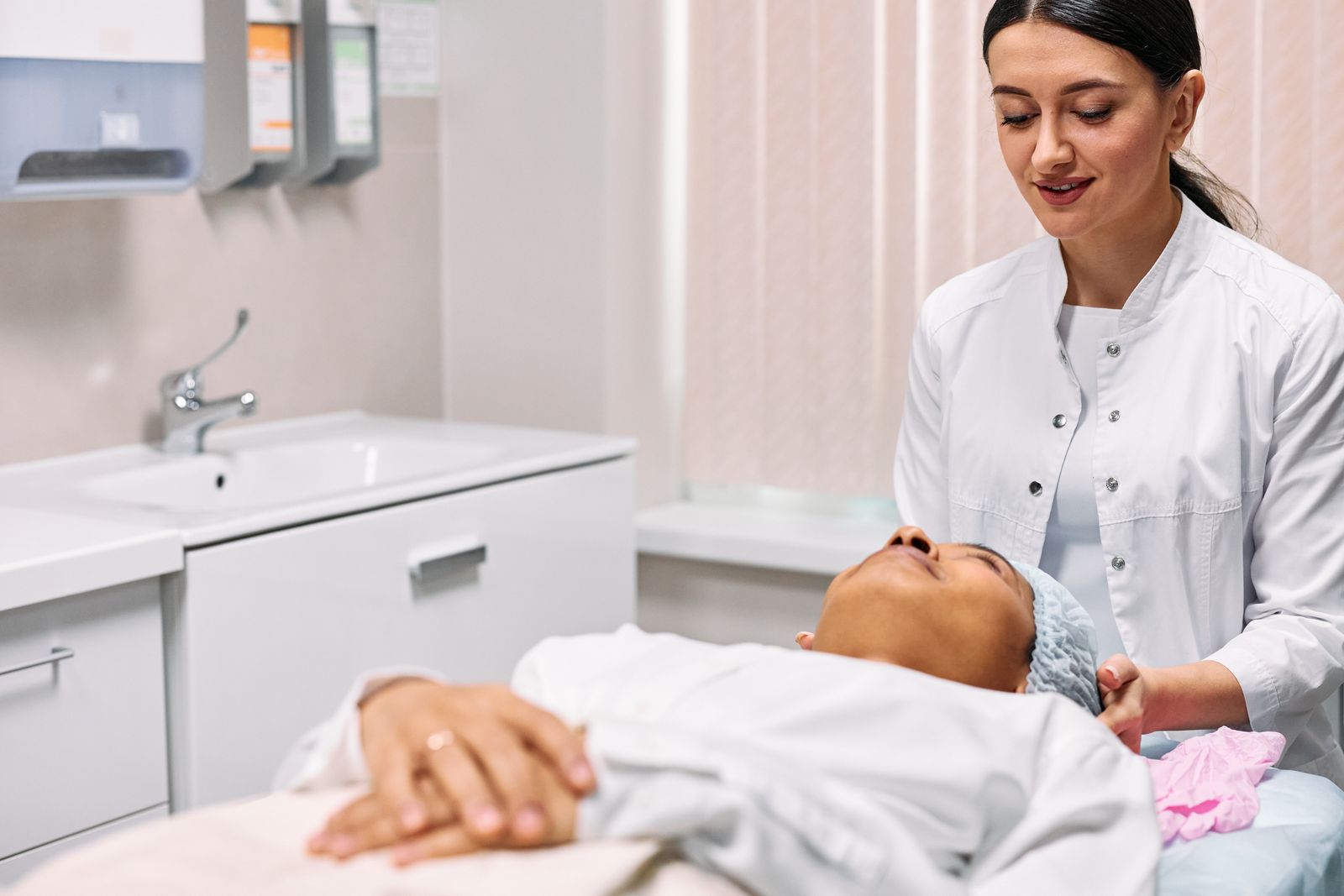
Over-the-counter Korean skincare is very good at three things: protecting the skin barrier, keeping it hydrated, and delivering low-concentration actives consistently over time. That covers a lot — dullness, mild unevenness, rough texture, and everyday dryness all respond to a good routine.
What it can’t do is the thing the flashiest marketing implies. No drugstore serum meaningfully lifts sagging, clears stubborn melasma, closes enlarged pores in a structural way, or removes sun spots that sit deep in the skin. Those are clinic-level problems that need lasers, energy devices, or injectables — and if a product promises those results from a bottle, that overpromising is your cue to be skeptical, not to buy. A realistic goal for a haul: healthier, calmer, better-protected skin. That’s worth a lot on its own.
The five things actually worth buying

1. A sunscreen you’ll genuinely reapply. This is the single highest-value item in any Korean drugstore, full stop. Korean SPF formulas are famously light and comfortable, which matters because the best sunscreen is the one you’ll actually wear and reapply. Expect roughly ₩12,000–25,000 (about $9–19). Buy two so one lives in your bag. Nothing else in your cart protects against future sun damage and pigment the way this does.
2. A gentle, low-pH cleanser. A mild cleanser that doesn’t leave your skin tight is the quiet backbone of every good routine. Around ₩8,000–15,000 ($6–11). Unglamorous, and it does more for most people than any serum.
3. A basic barrier moisturizer. Look for ceramides, panthenol, or centella (cica) rather than a long “brightening/lifting/firming” claim list. ₩10,000–20,000 ($8–15). This is what keeps skin from getting reactive, especially if you’re layering any active.
4. One well-chosen active — not five. A single vitamin C, niacinamide, or gentle retinal/retinol product used consistently beats a shelf of competing serums that irritate each other. ₩15,000–35,000 ($11–27). If you’re new to actives, start with one and give it eight weeks.
5. A soothing recovery product (a centella ampoule or a simple sleeping mask) for when your barrier is stressed from travel or over-exfoliation. ₩12,000–25,000 ($9–19).
That’s a complete, high-functioning routine for well under $100. Everything past this is optional.
The TikTok-hyped picks a clinic would quietly skip
Anything sold as an at-home “laser,” “lifting,” or “V-line” device. Handheld gadgets that promise to lift or contour rarely deliver clinically meaningful change, and the marketing borrows the language of real in-clinic energy treatments. If firmness is your goal, the honest answer is that this is a pore- and skin-tightening conversation, not a drugstore one.
“Melasma-erasing” or “spot-correcting” brightening kits. OTC brighteners can help mild, superficial unevenness, but true melasma is stubborn, hormone-linked, and prone to bouncing back — it’s managed over months with in-clinic protocols like gentle weekly laser toning, not cleared by a bottle. Buying the kit expecting melasma to vanish is the classic disappointment.
Aggressive multi-acid “glass skin in 7 days” peels. Stacking strong exfoliating acids fast is the most common way tourists wreck their barrier mid-trip and go home red and flaky. Slow and gentle wins.
24k gold masks, snail-overload “miracle” ampoules, and whatever single product a video swears “changed my skin overnight.” Overnight transformation isn’t physiologically how skin works. These aren’t dangerous — they’re just where the money leaks out of your haul with little to show for it.
The pattern is simple: TikTok rewards products that look dramatic in a 20-second clip. Skin rewards products that are boring and consistent for eight weeks.
How to read an Olive Young shelf like a clinic would
A few habits make the whole store easier to navigate:
- Ingredients over claims. Turn the box around. A short, sensible ingredient list beats a front label crowded with “lifting, firming, whitening, anti-aging” all at once.
- One active per product, and don’t stack blindly. Vitamin C in the morning and a retinoid at night is plenty. Adding a third strong active usually buys irritation, not results.
- Fewer, better bottles. A 10-step haul isn’t 10x better than a 4-step one; it’s just more chances to irritate your skin and more money spent.
- Patch-test the actives, especially before or during a trip, so you’re not reacting to something new the day before a big event.
Where the drugstore stops and a clinic starts
Think of it as two different jobs. A good Olive Young routine is maintenance — protection, hydration, barrier health, gentle daily improvement. It’s genuinely valuable and you should do it well.
But if your actual concern is deep sun damage, set-in pigment, texture and scarring, enlarged pores, or laxity, no haul closes that gap — that’s the work of in-clinic treatment for sun damage, spots, and texture. The most useful thing a Seoul skin clinic does here isn’t sell you more products; it’s an honest assessment of which of your goals a routine can reach and which need a treatment plan — so you stop spending on bottles that were never going to get you there. MIO Clinic’s approach is deliberately conservative and assessment-first, with AI-assisted skin analysis before anyone recommends a single thing, precisely because “buy less, target better” is usually the right call for skin.
So build the small, boring, excellent haul. Wear the sunscreen. Skip the gadget. And if there’s a concern a routine keeps not fixing, that’s the signal it was never a drugstore problem in the first place.
FAQ
Is a $12 Olive Young sunscreen really as good as an expensive one? For most people, yes. What matters far more than price is that the formula feels good enough that you reapply it through the day. Korean drugstore sunscreens are formulated to be light and wearable, which is exactly why they work in real life — an expensive sunscreen you don’t reapply protects you less than a cheap one you do.
Can Olive Young products get rid of my melasma or dark spots? Not truly. Over-the-counter brighteners can slightly improve mild, surface-level unevenness, but real melasma is deep, hormone-linked, and tends to return. It’s managed over months with in-clinic treatment, not cleared by a serum. If a product claims to erase melasma, treat that as a reason to doubt it.
Are the viral at-home lifting or “laser” devices worth buying? Generally no. Handheld gadgets rarely produce clinically meaningful lifting or contouring, even though they borrow the language of real in-clinic energy treatments. If firmness or lifting is your genuine goal, that’s a clinic conversation, not a drugstore purchase.
How many products do I actually need? Four core items cover most people: a gentle cleanser, a barrier moisturizer, a sunscreen, and one active (like vitamin C or a retinoid). A soothing recovery product is a useful fifth. More bottles than that usually adds irritation and cost, not results.
Why does TikTok love products a clinic would skip? Because a short video rewards anything that looks dramatic and instant, while skin rewards products that are consistent and gentle over weeks. Overnight “miracle” results aren’t how skin biology works, so the most cinematic products are often the least worth your money.
Should I do a clinic treatment or just fix my routine first? Start with the routine if your concerns are dullness, dryness, mild texture, or protection — a good haul handles those. Consider an assessment if your concern is deep pigment, scarring, pores, or laxity that a solid routine hasn’t moved, since those are treatment-level, not drugstore-level, problems.
Book at MIO Clinic, Gangnam
Seoul Skin Notes is the official journal of MIO Clinic, a skin & aesthetic clinic in Gangnam, Seoul. The MIO team handles consultations and bookings in English over WhatsApp — tell them what you are considering and they will walk you through your options.
MIO Clinic
2-3F, FINE TOWER, 372 Gangnam-daero, Gangnam-gu, Seoul
Gangnam Station, Exit 4 — 3-minute walk
Hours: Mon & Fri 10:00–21:00 · Tue–Thu & Sat 10:00–19:00 · Sun closed
Web:mioclinic.kr/en · Instagram:@mioclinic_global · Email:en-official@mioclinic.kr · Google Maps